


 Log In














Hospital Bed Management Software: What Smaller Facilities and SNFs Actually Need
Hospital bed management software tracks which beds are open, occupied, or being cleaned. It also coordinates patient placement, transfers, and discharges, so people move through a facility without bottlenecks. Large, high-volume hospitals use enterprise systems for this. Skilled nursing facilities (SNFs) and smaller sites usually need a lighter, right-sized version of the same idea, and Knack Health is built for exactly that scale.
Search “hospital bed management software” and you’ll get the enterprise version of the answer: command-center dashboards, real-time location hardware, deep EHR integrations. All of it assumes you’re a large hospital. What you won’t find is a straight answer for the SNF administrator, the home-care coordinator, or the 60-bed facility running placement on a whiteboard and a stack of phone calls. This post is that answer. It covers what bed management software actually does, why the enterprise tools overshoot you, and the handful of features genuinely worth having. Then it shows how Knack Health lets you build exactly that, without writing a line of code.
What is hospital bed management software?
Hospital bed management software gives a facility a real-time view of its bed inventory and coordinates how patients get assigned to those beds. At its core, it answers three questions at any moment: which beds are available, which are occupied and by whom, and which are unavailable because staff are cleaning, repairing, or holding them.
On top of that live status, it coordinates the movement around the beds. Staff admit a new patient to an open bed, transfer someone between units or facilities, flag a room for housekeeping after discharge, and track how full the facility is over time. The point is to replace the whiteboard, the phone tag, and the shared spreadsheet with one source of truth everyone can see.
Large organizations often run this as part of a broader patient-flow platform or an EHR module. Smaller facilities frequently run it on a physical whiteboard and a lot of phone calls, and that works fine until volume, transfers, or staff turnover make it fragile. A right-sized system like Knack Health is built for that exact moment.
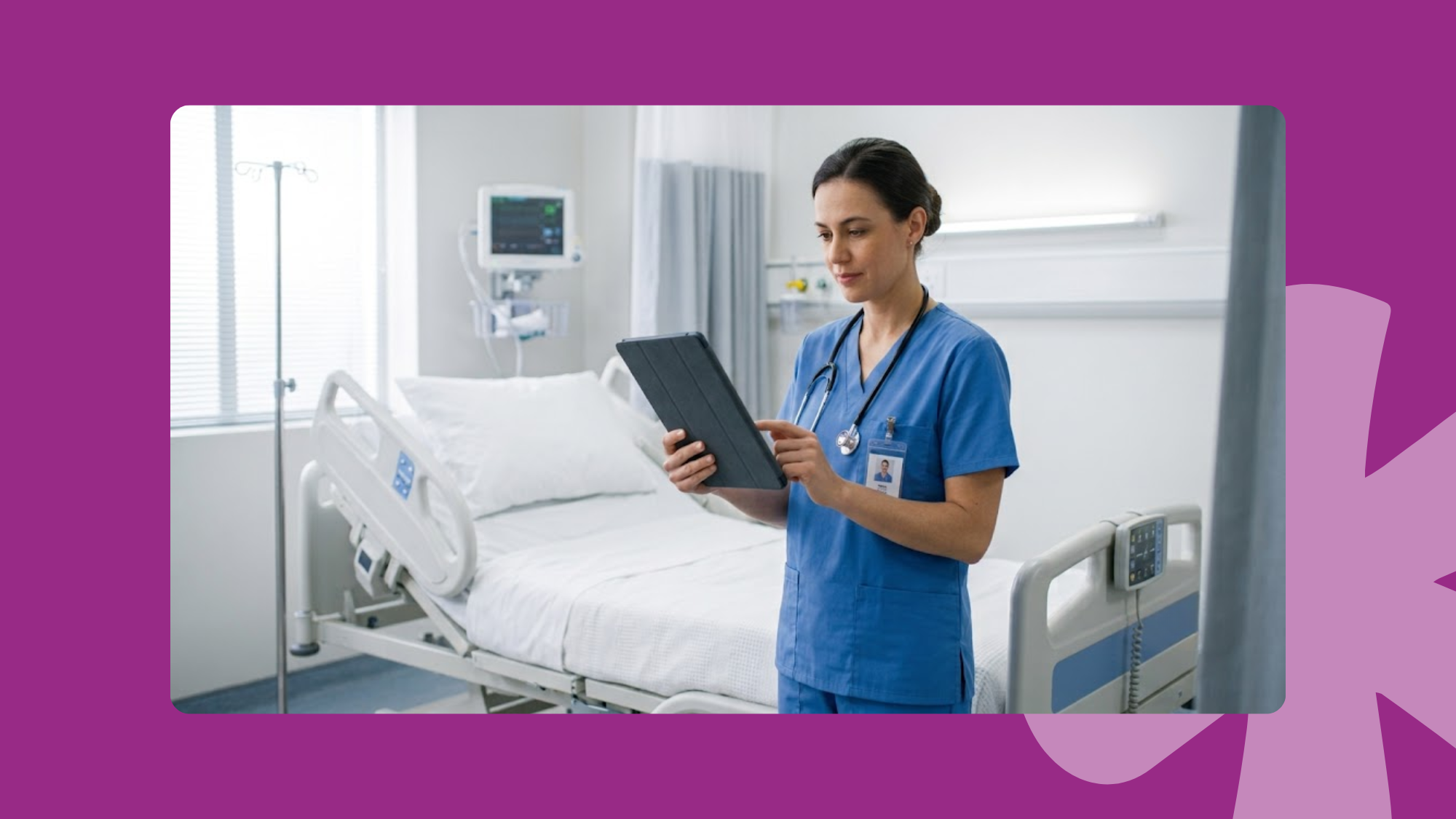
Why bed management matters: patient flow, transfers, revenue, and delays
Beds are the constraint the whole facility runs against, so managing them well touches almost everything:
- Patient flow. When staff can see open beds instantly, admissions and transfers move faster and patients don’t wait in the wrong place. When staff can’t see that, people get stuck, whether in the ER, at a referring hospital, or in a bed that should have turned over hours ago.
- Transfers and placement. Accepting a transfer or a referral means knowing, right now, whether you have an appropriate open bed. Without a live view, that call runs on stale information and phone tag, and good placements slip away.
- Revenue and occupancy. An empty bed nobody knows about is lost revenue for the day. Faster, more accurate turnover keeps occupancy where it needs to be without overbooking.
- Delays and turnover. A bed can sit “occupied” in everyone’s mind after the patient leaves, simply because nobody told housekeeping it’s ready to clean. It’s a delay hiding in plain sight, and tracking cleaning status closes it.
For a SNF or a smaller facility, these problems match a big hospital’s in kind, just smaller in scale. The enterprise answer is usually the wrong fit for that scale, which is why Knack Health takes a different approach built for it.
Enterprise systems vs. the reality for SNFs and smaller facilities
Tools built for large hospitals and health systems dominate this category. To be fair to them, they’re genuinely good at what they do:
- Enterprise patient-flow platforms (for example, TeleTracking) orchestrate flow across a large hospital or a multi-site system, often with command-center dashboards and deep integrations.
- EHR-integrated bed/flow modules inside major electronic health record systems (Epic, Oracle Health/Cerner, MEDITECH) manage beds as one piece of a much larger clinical suite.
- RTLS and BLE tracking vendors use real-time location hardware, meaning badges, tags, and sensors installed throughout the building, to track beds, equipment, and people automatically.
These are the right tools for a 400-bed hospital with high acuity, constant transfers, and a dedicated IT team. They’re well-built for that job, just not sized for a smaller facility. A six-figure RTLS deployment with building-wide sensors, or a hospital-grade flow suite with a months-long implementation, is far more system than a 60-bed SNF needs. The cost and complexity rarely pencil out at that scale.
Smaller facilities actually need the core idea: a shared real-time picture of bed status, and a simple way to coordinate placement. They don’t need the price tag, the hardware, or the implementation project. You don’t need a six-figure platform to know which beds are open. Knack Health fits right into that gap, between “whiteboard and phone calls” and “enterprise system.”
How Knack Health handles bed management
Knack Health gives you a structured, real-time system for tracking beds and coordinating placements. It’s built specifically for the scale SNFs and smaller facilities operate at:
- A structured bed inventory. You set up your units, rooms, and beds as connected records. Instead of a whiteboard, you get a live, searchable inventory of your entire facility.
- A referral-to-admission pipeline. Incoming referrals move through clear stages, such as referral, in review, accepted, and admitted. Your team always knows where each patient is in the process instead of tracking it in someone’s inbox.
- A centralized admissions dashboard. Coordinators see referral status, available beds, and upcoming admissions side by side. Placement decisions happen against live information instead of a phone call to three different units.
- Role-based portals. Administrators, coordinators, and other staff each see the views and permissions relevant to their role. People get what they need without wading through everything else.
- Occupancy and performance dashboards. Leaders track occupancy rates, bed availability, and referral trends in real time, instead of piecing together a picture from spreadsheets after the fact.
Knack Health is a no-code platform, so your team can adjust patient fields, referral workflows, bed structures, and dashboards yourselves as your process changes. You don’t wait on a developer or an IT backlog.
Core features a right-sized bed management system needs
If you’re a smaller facility or a SNF evaluating options, here’s the feature list that actually matters, and where Knack Health covers it:
- Real-time bed status. A live view of every bed as available, occupied, being cleaned, or on hold. Everything else sits on top of this.
- A simple census view. Who’s in which bed right now, and your current occupancy at a glance.
- Placement and assignment tracking. A clear record of which patient is assigned to which bed, and by whom, so nothing gets double-booked.
- Transfer and referral intake. A structured way to capture incoming referrals or transfer requests and match them to open, appropriate beds.
- Housekeeping / turnover status. A handoff so the right person knows to clean a bed once it’s discharged, and knows when it’s ready again.
- Alerts and notifications. Automatic flags when a bed opens, a referral comes in, or a room has been waiting on cleaning too long.
- Basic reporting. Occupancy rate and turnaround time over time, so you spot patterns instead of guessing.
- Mobile access. Staff aren’t at a desk. They need to check and update status from a phone or tablet on the floor.
Notice what’s not on that list: location-tracking hardware, deep clinical integration, multi-site command centers. Those are enterprise concerns. Knack Health gives smaller facilities the visibility and coordination that actually move the needle, without the overhead of the enterprise category.
How to coordinate SNF bed placements and transfers with Knack Health
Here’s how a team typically sets this up in Knack Health. Screens and exact steps can evolve as the product does, so treat this as the general shape of the process rather than a fixed script.
- Map your bed inventory as data. Represent each unit, room, and bed as a structured record in Knack Health. This turns “the whiteboard” into something you can filter, search, and report on.
- Define your statuses. Pick a short, clear set (available, occupied, cleaning, hold) so every bed is always in exactly one known state.
- Build a status dashboard. Knack Health lets you create a live view grouping every bed by status. Any staff member can see availability at a glance from a phone or the nurses’ station.
- Add a placement / transfer intake form. Capture incoming referrals and transfer requests as records: patient, needs, source, and timing. That replaces sticky notes and voicemail.
- Connect referrals to open beds. Move each referral through your pipeline and link it to an available, appropriate bed. Placement decisions happen against live availability, not yesterday’s picture.
- Automate the turnover handoff. Once staff mark a bed discharged, Knack Health can notify housekeeping automatically and flip it to “cleaning,” then back to “available” when it’s done, closing the delay between discharge and the next admission.
- Add simple reporting. Track occupancy and turnaround time. You’ll see where flow is getting stuck, and you’ll have the data to make the case for fixing it.
You’re handling patient placement information here, so it matters where that data lives. Knack Health runs on HIPAA-ready infrastructure, so your team can build this without starting from an open spreadsheet. It’s still worth reviewing the specifics with your compliance lead before real patient data goes into any system.
When enterprise bed management is still the right call
To be clear, this isn’t an argument that enterprise platforms are the wrong choice for everyone. They’re the right choice when:
- You’re running a large hospital with high patient volume and acuity.
- You need real-time location tracking of beds, equipment, and staff across a big physical footprint.
- Bed management has to integrate deeply with a full EHR and other clinical systems.
- You have a dedicated IT or infrastructure team to implement and maintain it.
- You’re coordinating flow across multiple sites from a central command center.
If that’s you, TeleTracking, an EHR-native flow module, or an RTLS vendor is worth the investment. Everyone else is a different story: SNFs, home-care agencies, and smaller facilities that just need to know which beds are open, without a four-month rollout. Knack Health covers that need at a fraction of the overhead.
FAQ
What is a bed management system?
A bed management system shows, in real time, which beds in a facility are available, occupied, or unavailable. It also coordinates how patients get assigned to them. It centralizes bed status and placement, so staff aren’t relying on a whiteboard, spreadsheet, or phone calls to know what’s open.
How does bed management software improve patient flow?
It gives every staff member the same live view of bed availability. Admissions, transfers, and discharges move without anyone waiting to check. Faster, more accurate placement means fewer patients stuck in the wrong place, quicker room turnover after discharge, and fewer delays across the facility.
Do skilled nursing facilities need bed management software?
SNFs benefit from the same real-time visibility and coordination hospitals do, just at a smaller scale. Most don’t need an enterprise platform. A right-sized system like Knack Health, built to track bed status and coordinate placements and transfers, is usually enough. It replaces the whiteboard-and-phone-calls approach that turns fragile as volume and staff turnover grow.
What’s the difference between bed management software and an EHR?
An EHR (electronic health record) stores a patient’s clinical information: history, medications, notes, orders. Bed management software focuses on operations instead: which beds are open, and how patients are placed and moved. Large systems bundle bed management into the EHR. Smaller facilities often run a lighter, standalone tool like Knack Health for it.
Can you build a bed management system without code?
Yes. Knack Health lets you model your beds as records, build a live status dashboard, capture referrals and transfers, and automate turnover handoffs, all without a developer. It’s a practical route for smaller facilities that need the core capability without an enterprise implementation.
How much does hospital bed management software cost?
It varies widely by scale and approach. Enterprise patient-flow platforms and RTLS systems can run into six figures once you add hardware and implementation, since that’s the tier of hospital they’re built for. Knack Health costs far less, since it skips the hardware and the long rollout.