
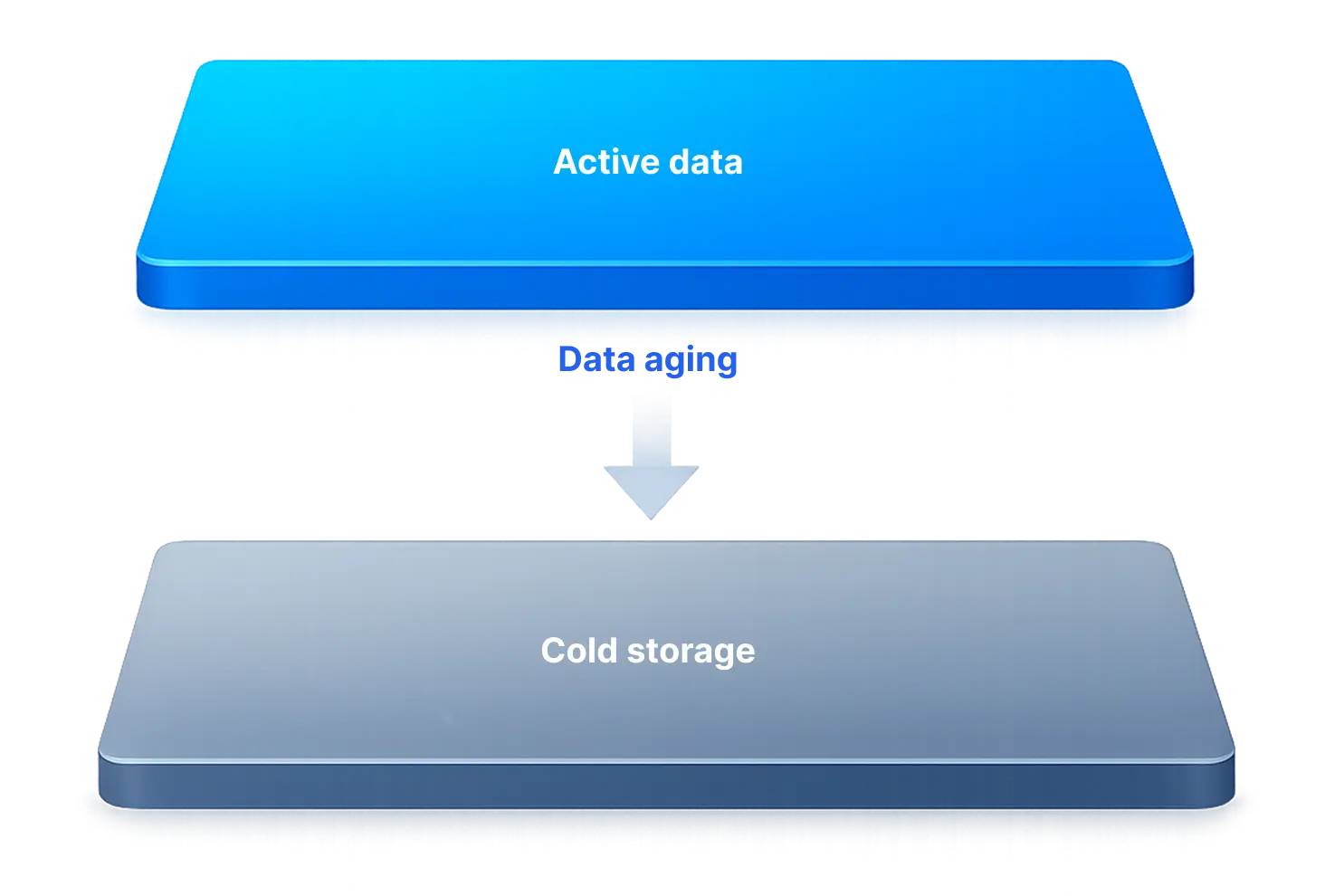
of healthcare data
is inactive
There are two common ways teams handle this today:
This maintains it for legal retention requirements, but it comes with ongoing infrastructure costs, licensing fees, and maintenance overhead.
While this reduces spend, it often makes the data harder to use. Access may require engineering support, and non-technical teams lose visibility into what is stored.

Store data for the long term without turning it into a static archive.
Knack Health provides a structured way to store healthcare data outside of active systems while keeping it accessible.
Import data from legacy systems into an organized database for long-term retention. Access is managed through simple interfaces and controlled through roles and permissions, so teams only see what they need — without relying on engineering support or rebuilding old systems.
Because Knack is a no-code platform, you can also build lightweight workflows or views on top of archived data when needed.
Move historical data out of outdated platforms so they can be retired without losing access.
Store required patient records in a system designed for access and organization, not just storage.
Retrieve records quickly when audits or internal reviews require them.
Maintain structured backups that can be accessed and verified when needed.
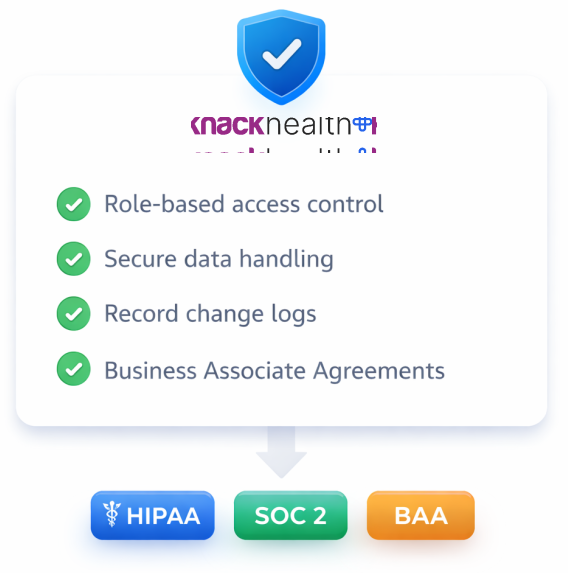
HIPAA-compliant data storage refers to any system used to store protected health information (PHI) in a way that meets HIPAA requirements.
That includes safeguards like controlled access, secure data handling, and the ability to track changes to records over time. It also typically requires a Business Associate Agreement (BAA) between the storage provider and the organization handling the data.
The key point is that compliance applies to all PHI, whether it is actively used or stored long term.
Retention requirements vary based on state laws, provider type, and the kind of record being stored.
In many cases, patient records must be retained for several years after the last interaction. For minors, records are often kept for a number of years after the patient reaches adulthood.
Because requirements differ, most organizations plan for long-term retention by default. This is one reason archived data continues to grow over time.
Cold storage alone is not enough. The way data is stored and accessed still needs to meet HIPAA requirements.
That includes limiting access to authorized users, protecting the data from unauthorized exposure, and maintaining a clear record of changes.
Even if data is rarely accessed, it is still subject to the same rules as active data.
It depends on how the data is stored.
In many traditional storage setups, accessing archived data requires technical support or manual retrieval processes. This can slow down audits, internal requests, or patient record lookups.
When data is stored in a structured system with a usable interface, teams can search and retrieve records directly, without relying on engineering or reopening legacy systems.