


 Log In












Key Takeaway:
A HIPAA-compliant database ensures the confidentiality, integrity, and availability of protected health information (PHI). With no-code AI platforms like Knack, healthcare teams can build secure, compliant systems—without the complexity of traditional software development.
What Makes a Database HIPAA-Compliant (And Why It’s Critical)
A HIPAA-compliant database is a data storage system designed to meet the strict security and privacy standards outlined in the Health Insurance Portability and Accountability Act (HIPAA), ensuring the protection of sensitive patient health information.
For professionals in healthcare, medical billing, or IT, choosing a database that adheres to these standards is essential to prevent breaches and maintain patient trust—especially as reports show that 92% of healthcare organizations were targeted by cyberattacks within the past year. These databases use safeguards such as encryption, access controls, and audit logs to protect data both at rest and in transit.
While achieving compliance may sound highly technical, it doesn’t have to be complicated—modern no-code platforms now make it possible to build and manage HIPAA-compliant databases securely, without the need for advanced coding expertise.
Key Components of a HIPAA-Compliant Database
There are several moving parts that contribute to a patient data database being HIPAA compliant, from secure infrastructure and certifications to strict access management and encryption standards. And while stringent security protocols are essential, vendors must also be willing to sign Business Associate Agreements (BAAs)—a critical step we’ll break down in more detail below.
Why BAAs Matter for HIPAA-Compliant Vendors
Business associate agreements are required by HIPAA because they legally bind vendors to follow privacy and security standards when handling protected health information (PHI).
These agreements outline each party’s responsibilities for safeguarding data, including implementing proper security controls, reporting breaches, and ensuring compliance throughout all data interactions. HIPAA requires BAAs whenever third-party vendors—such as cloud providers or database hosts—have access to PHI, ensuring that everyone involved is equally accountable for maintaining data protection.
Knack supports this level of accountability through its transparent data handling policies, helping healthcare organizations partner confidently with a platform that prioritizes responsible, compliant data management.
3 Easy Ways to Start Building For Free
1. Generate an App with AI
2. Use one of our templates
3. Import your own data

Free 14-Day Trial. No Credit Card Required
SOC 2, ISO 27001 & More: Security Certifications That Support HIPAA Compliance
Earning certifications like SOC 2 Type 2 and ISO 27001 demonstrates that an organization has implemented strong, independently verified controls for secure data handling.
While these certifications aren’t explicitly required under HIPAA, they serve as powerful external validation that an organization’s practices align with HIPAA’s rigorous standards for privacy and security. SOC 2 Type 2, in particular, goes beyond the single-moment assessment of a Type 1 report by proving that an organization consistently maintains compliance and security protocols over an extended period.
This ongoing verification helps healthcare providers and their partners build greater trust and confidence in their data management operations.
Technical Safeguards: Encryption, Access Control, and Audit Logging
A secure patient data storage database that’s HIPAA compliant relies on safeguards such as encryption, access control, and audit logging to keep sensitive information protected.
Here, encryption ensures that data is unreadable to unauthorized users, even if intercepted, while access control limits who can view or modify records based on defined roles and permissions. Meanwhile, audit logging tracks every interaction with patient data—answering critical questions like “Who accessed which record and when?”—to maintain transparency and accountability.
Together, these features significantly reduce the risk of unauthorized access and compliance violations, giving healthcare organizations confidence in both their data integrity and regulatory adherence.
Why Cloud Architecture Matters for HIPAA-Compliant Databases
The foundation of any HIPAA-compliant cloud database lies in its secure cloud architecture, which is designed to ensure redundancy, encrypted backups, and strict access controls. Hosting platforms like AWS, Azure, or Knack’s infrastructure provide advanced protections that help healthcare organizations safeguard sensitive data without the heavy maintenance burden of traditional on-premises systems.
Unlike on-prem setups—which require in-house hardware management and dedicated IT oversight—cloud-hosted solutions automate security patches and backups, reducing the risk of downtime or human error.
For example, a healthcare organization managing EHRs can easily scale storage and enforce compliance policies through a cloud dashboard, instead of manually updating servers and worrying about physical data loss or unauthorized access.
How No-Code AI Platforms Automate HIPAA Compliance & Secure PHI
A no-code healthcare database makes it easier for healthcare organizations to automate complex compliance tasks while maintaining strong protections for PHI.
By combining automation and visual workflows, these platforms help reduce human error through features like automatic audit logging, permission controls, and real-time data validation. Visual workflows also enhance oversight, allowing compliance and IT teams to clearly see and manage every step of the process.
When built as a HIPAA-compliant database, these systems ensure that security safeguards are embedded into every layer—protecting sensitive patient information while enabling faster, more efficient compliance deployment across the organization.
Practical Applications of HIPAA-Compliant Databases
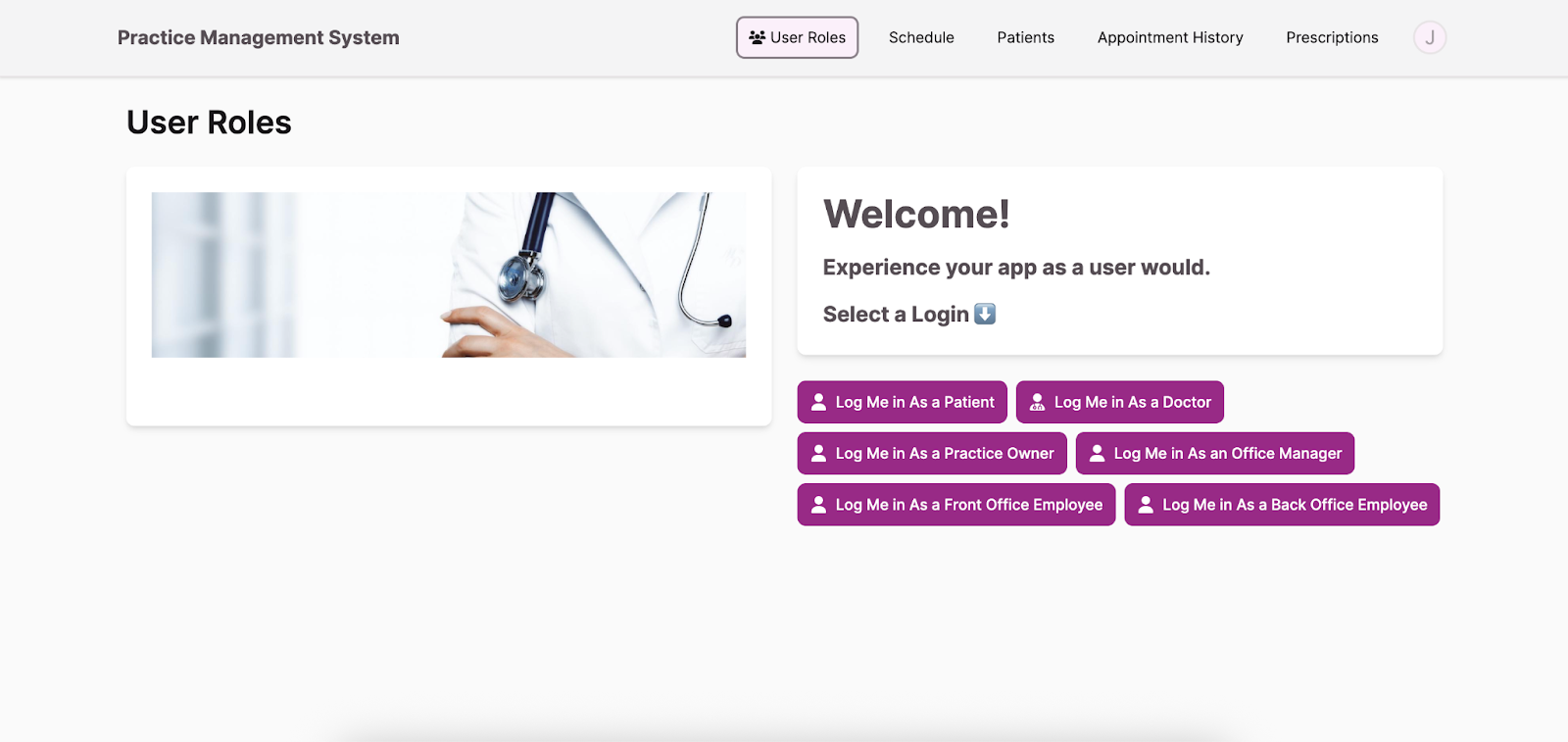
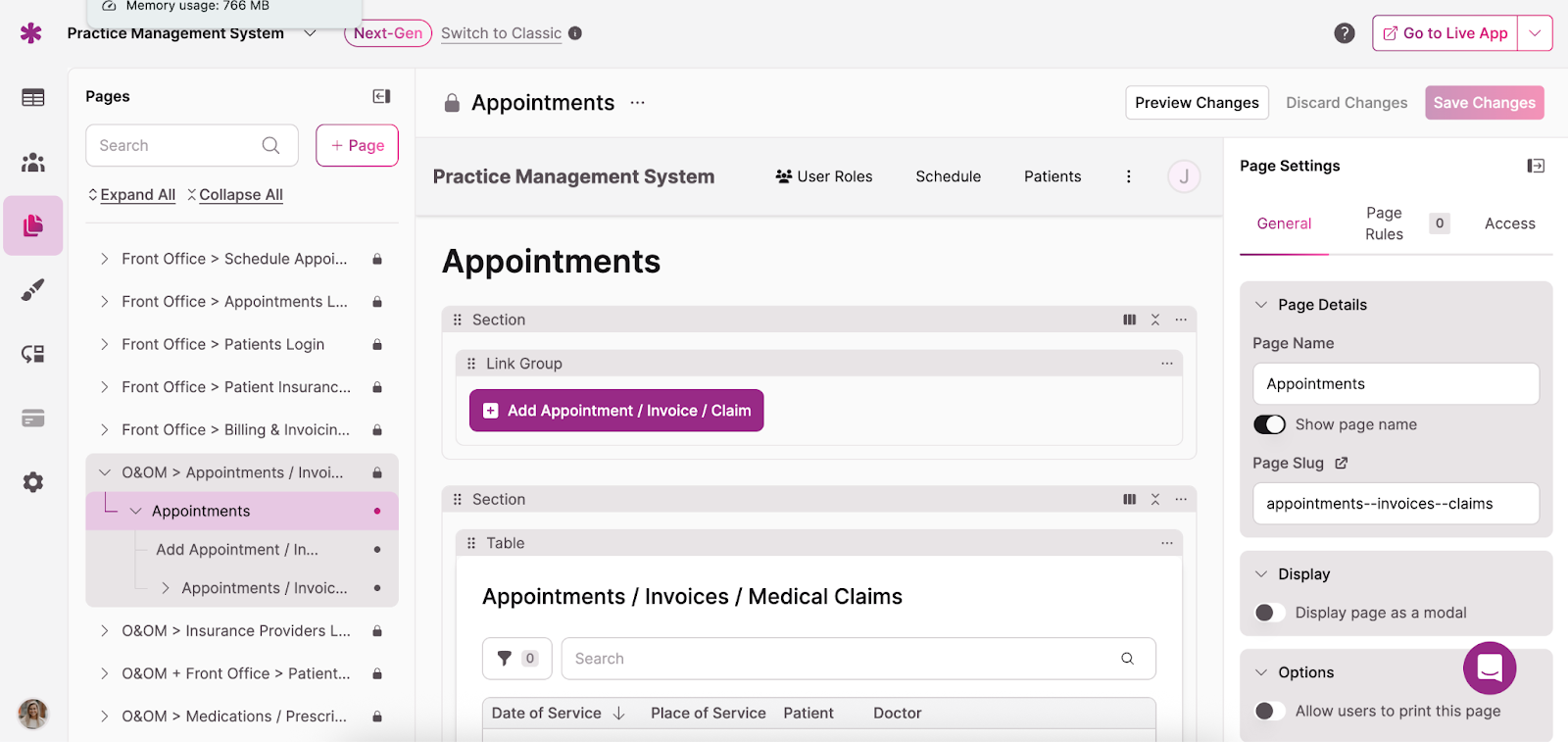
A well-built HIPAA-compliant database can support multiple departments within a healthcare organization, streamlining data access and management across teams. From patient portals and telehealth systems to operations and reporting, these versatile tools help ensure that information is shared securely and efficiently throughout your entire organization.
Use Case: Patient Portals & Telehealth Built on HIPAA-Compliant Databases
Imagine a clinic automating intake forms so patients can securely complete and submit their information online before their appointment — no paper, no manual entry, just seamless integration into the system.
In a HIPAA-compliant database, every login, scheduling request, and record retrieval happens through encrypted channels and strict access controls, ensuring only authorized users can view or modify PHI. Telehealth systems powered by these databases allow physicians to securely review patient histories, update notes, and share prescriptions in real time during virtual visits.
This kind of connected, compliant infrastructure not only saves time and reduces errors but also strengthens patient trust by keeping sensitive data protected at every step.
HIPAA-Compliant Reporting & Operational Dashboards
Ensuring that reporting, audit trails, and KPI dashboards are HIPAA compliant is also critical because they often contain sensitive patient data and must be handled with the same security and privacy standards as clinical records.
For instance, a hospital might use these capabilities to track patient outcomes, staff performance, and appointment metrics, all while logging who accessed each report and when to maintain full accountability and compliance.
With Knack’s no-code system, healthcare organizations can build these tools quickly and securely, regardless of technical experience, giving teams HIPAA-compliant reporting features without the complexity of traditional database programming.
Continuous Compliance: Monitoring and Support
Once your HIPAA-compliant cloud database is built, the challenge becomes monitoring and adjusting its use over time.
Here, tools such as automated monitoring dashboards, detailed audit reports, and robust support policies help track activity and identify potential compliance gaps before they become issues. Recurring updates and refreshed encryption protocols also play a key role in maintaining security and regulatory alignment.
With Knack, dedicated customer success and support teams provide guidance and assistance, helping healthcare organizations sustain HIPAA compliance while maximizing the efficiency and effectiveness of their database system.
Why Choose Knack for Your HIPAA-Compliant Database
Among the no-code HIPAA-compliant database builders available today, Knack stands out for its unmatched flexibility, ease of use, and robust feature set.
By using intuitive drag-and-drop builders, healthcare providers can quickly set up secure databases without coding, while built-in tools like encryption and role-based access controls keep sensitive patient data protected. Additionally, Knack’s workflow automation allows organizations to tailor processes—such as patient intake, scheduling, or reporting—to meet their unique operational needs.
Try Knack’s no-code platform for free and start building secure, compliant databases in minutes.
The Bottom Line: Secure PHI, Stay Compliant, Move Faster with No-Code Tools
HIPAA compliance in healthcare databases is essential not only for legal adherence but also for maintaining patient trust in an increasingly digital healthcare landscape.
As healthcare systems continue to digitize, the need for secure, compliant databases grows, and every moment without proper safeguards increases the risk of data breaches and costly regulatory audits. Implementing a secure, compliant system today ensures both protection and operational confidence for the future.
With Knack, HIPAA compliance isn’t complex—it’s built in.
Sign up for your free, no-risk trial today!
HIPAA-Compliant Database FAQs: What You Need to Know
What makes a database HIPAA-compliant?
A database is HIPAA-compliant when it has strong security measures like encryption, access controls, and audit logs, and when it meets all regulatory requirements for handling and protecting patient health information.
Can no-code platforms meet HIPAA requirements?
Yes. Modern no-code platforms can be built to meet HIPAA standards, providing secure data handling, automated compliance features, and robust access controls without needing advanced coding skills.
How does Knack ensure PHI protection?
Knack protects PHI through encryption, role-based access controls, audit logging, and workflow automation, while its HIPAA-compliant infrastructure ensures sensitive data stays secure at every stage.