Log In





Patient Scheduling Template
Knack's Patient Scheduling template app provides a comprehensive platform designed for doctors, patients, and administrators to manage the medical appointment scheduling process and workflow.

Build apps in minutes with AI

Protect and control your data

Manage and connect your data

Connect tools and sync workflows

Track and visualize performance

Manage roles and permissions

Run and automate online sales

Real-time appointment booking

Streamline operations with automations

Connect your AI tool to Knack

Start fast with pre-built app templates
Have a professional assist your build

Read insights and practical tips

See how others use Knack

Watch tutorials and user stories

Look up common no-code terms

Discover recent and upcoming webinars

The latest from Knack

See how Knack stacks up

Get hired to build or expand apps

Learn how to set up your app

Access technical guides and documents

Connect with other Knack builders

Earn revenue by referring Knack

Get hired to build apps

Resell Knack to your clients
Give care workers a clear view of their upcoming visits, care meetings, and assigned clients from a secure portal. Caregivers can quickly see where they need to be, when the visit starts, and what actions are required before and after the appointment. Coordinators and administrators can manage schedules in one centralized system instead of juggling spreadsheets, emails, and manual reminders.
Support electronic visit verification workflows with caregiver check-in and check-out records that capture visit date, time, location, client, caregiver, and service type. Care workers can submit visit activity from a mobile-accessible form, while supervisors can review completed visits and exceptions from the admin dashboard. This helps agencies maintain more complete documentation without adding unnecessary complexity for field staff.
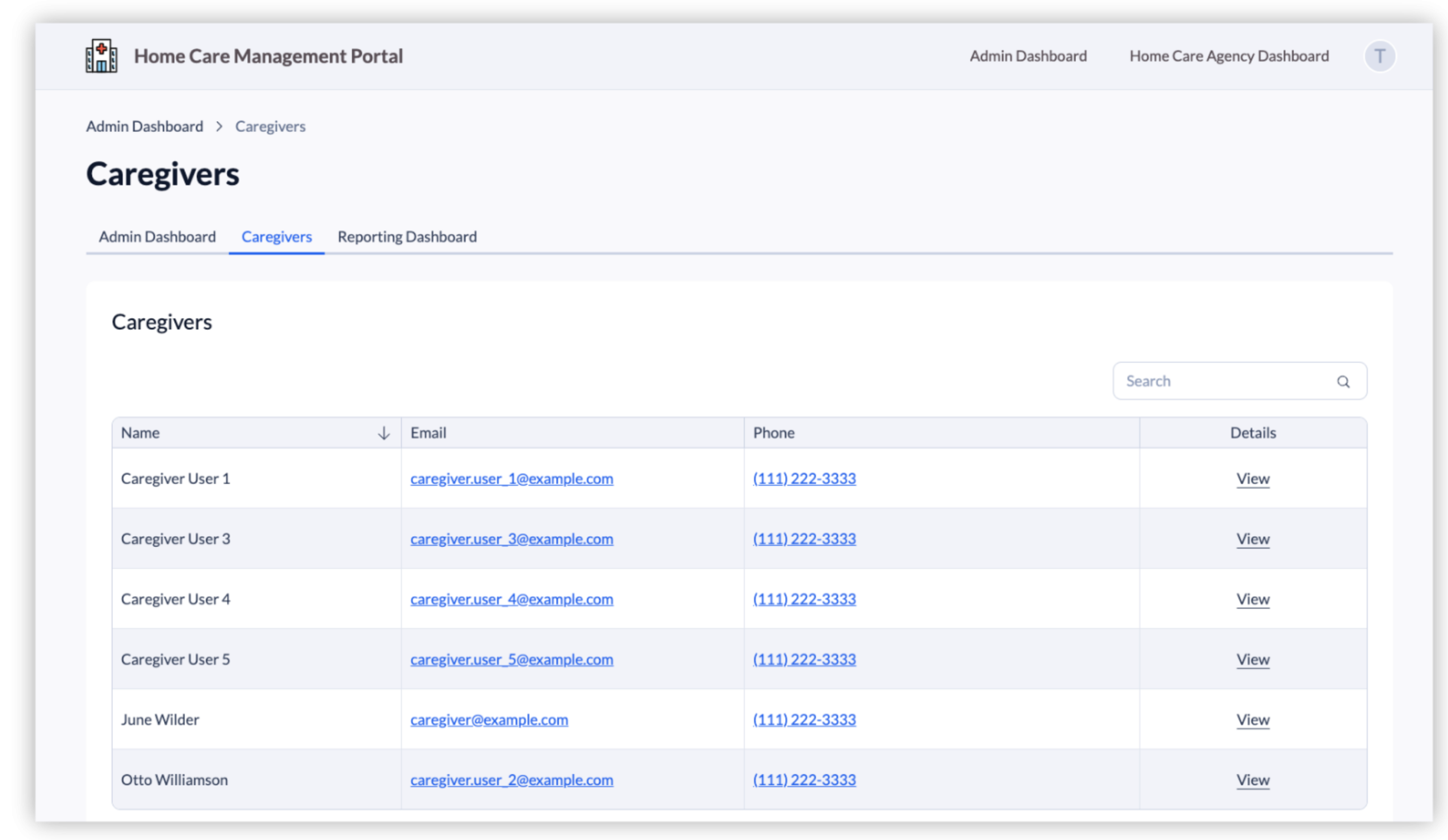
Maintain searchable profiles for every client and caregiver, including contact details, assignments, service areas, certifications, availability, and related visit history. Care teams can quickly access the information they need while permissions keep sensitive data limited to the right users. By connecting client, caregiver, and visit records, agencies can reduce duplicate data entry and keep operational information organized.
Allow caregivers to record structured visit notes, follow-up needs, concerns, and service updates directly in the app. Notes are connected to the relevant client and visit record, making it easier for coordinators and supervisors to review care history without searching through texts, emails, or paper forms. Required fields and standardized forms help improve consistency across every visit.
Create secure portals for caregivers, coordinators, supervisors, administrators, and authorized family members or guardians. Caregivers can see only their assigned visits and related client details, while administrators can manage records, schedules, approvals, and reports across the agency. Role-based access helps protect sensitive information while giving each user a simpler, more relevant experience.
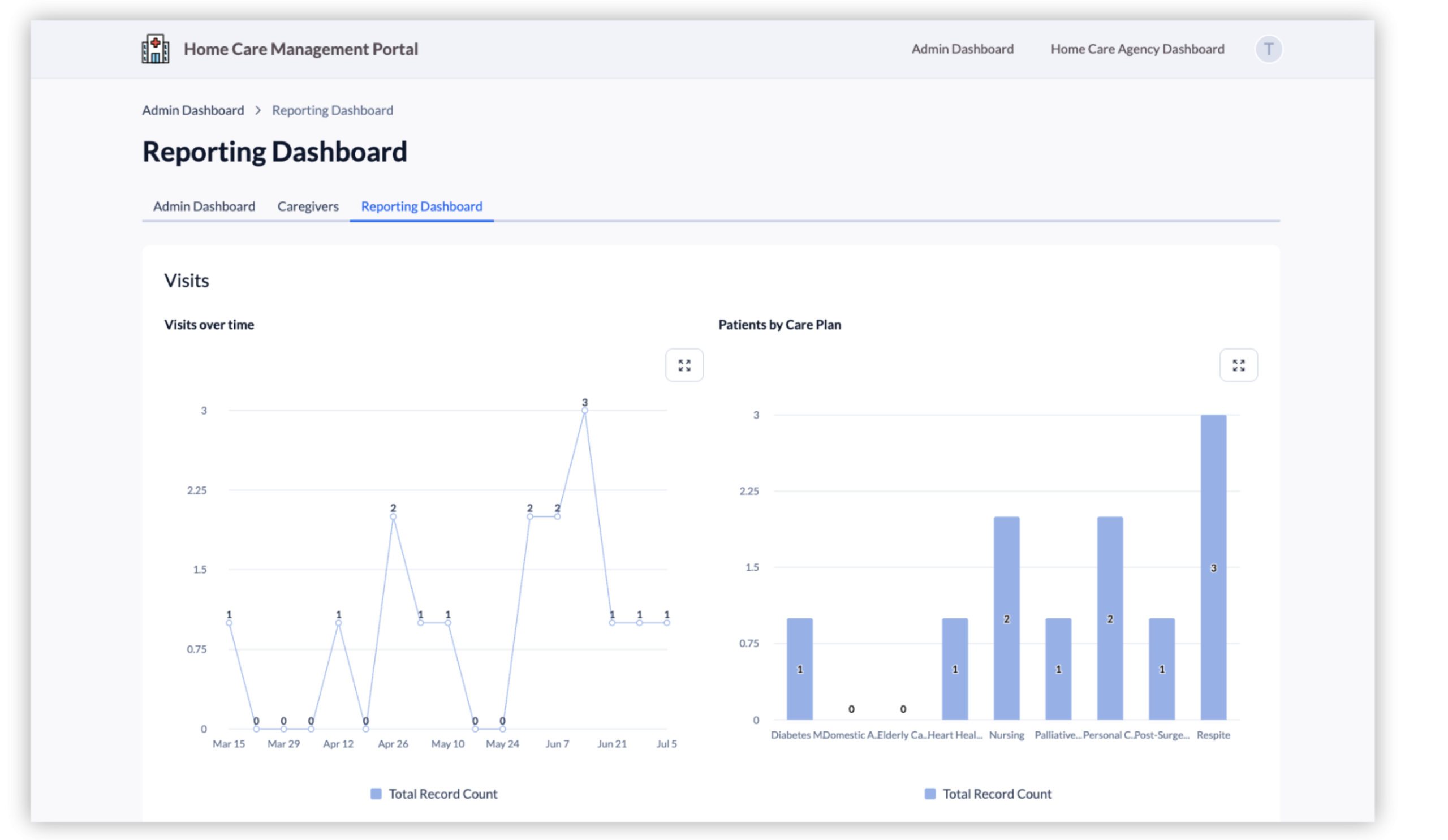
Bring schedules, caregiver records, client profiles, visit logs, notes, EVV data, and approvals into one fully searchable and filterable database. Supervisors can monitor visit activity, review incomplete records, prepare reports, and track operational trends from a single source of truth. All data stays organized, current, and accessible to authorized users from any device.
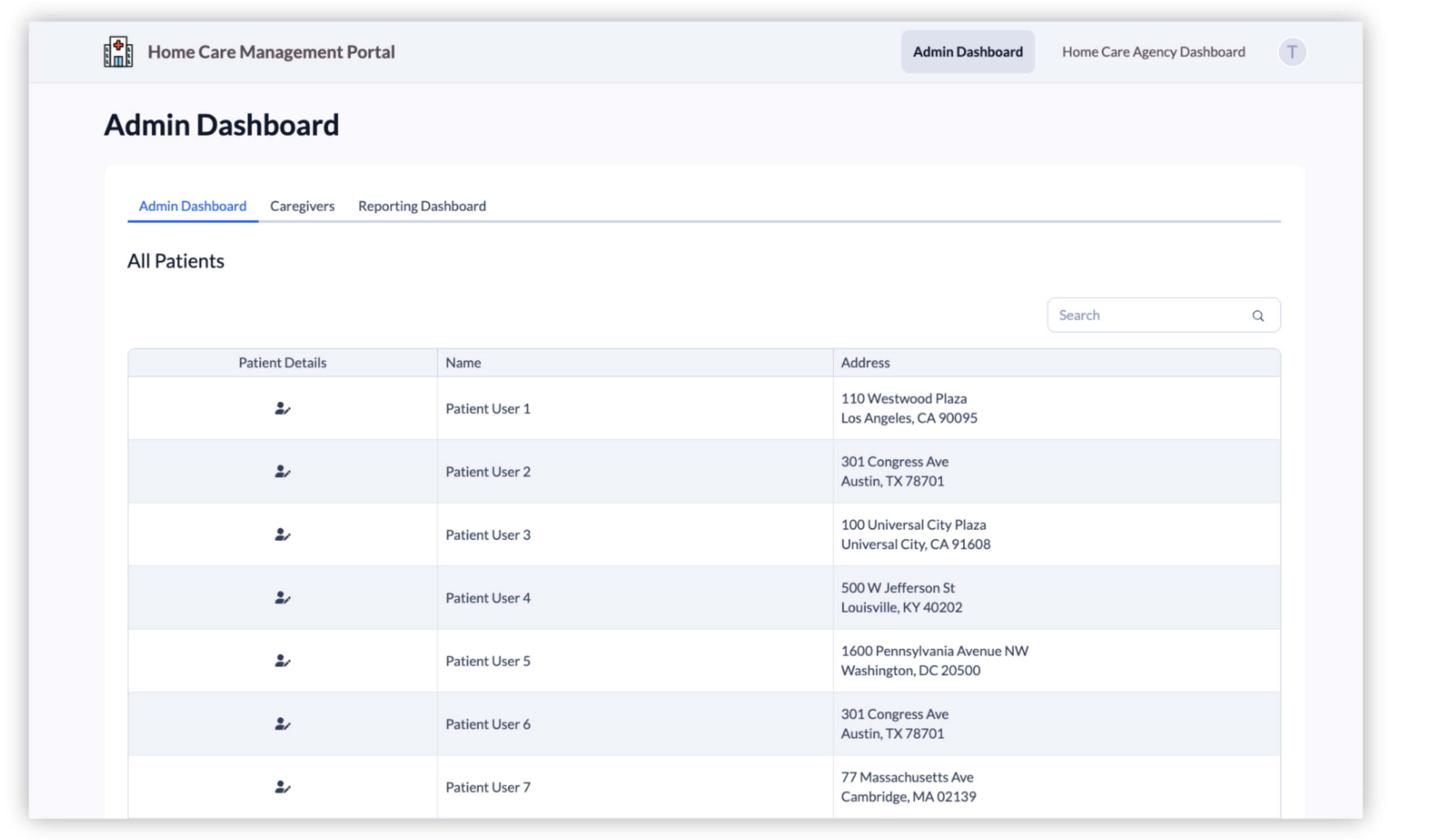
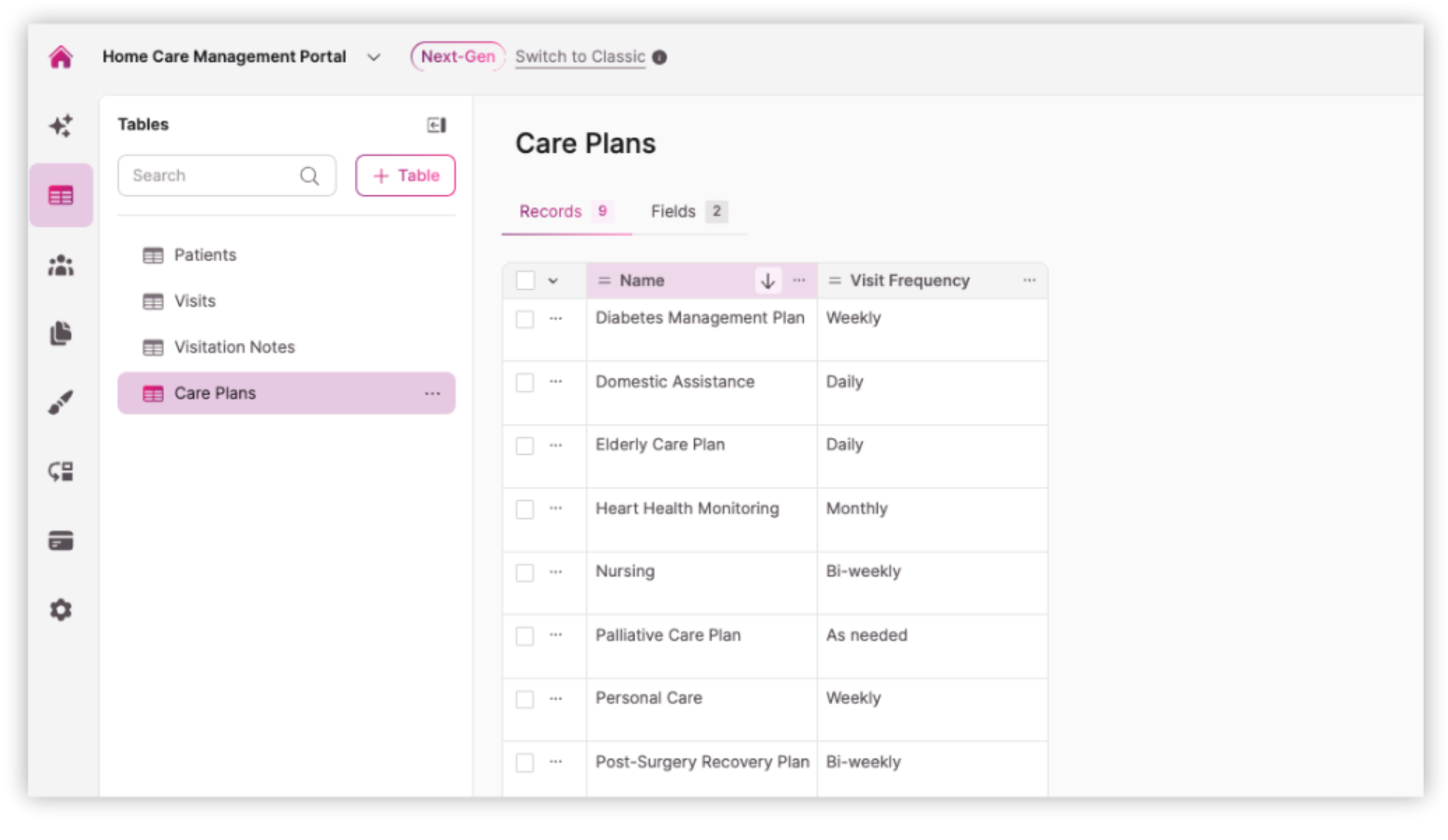
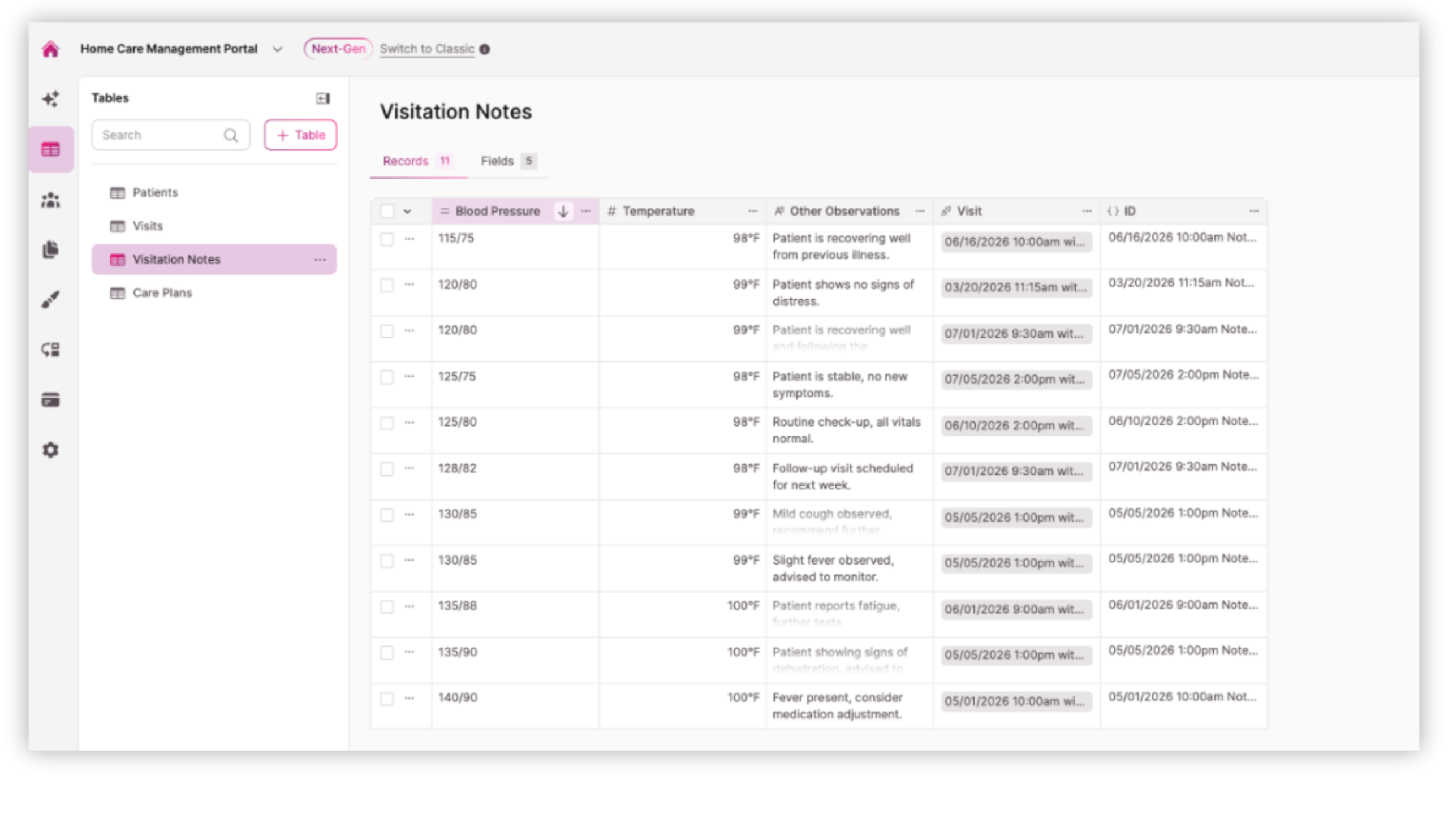

Help care workers manage upcoming visits, clock in and out, record notes, and confirm completed services from the field. Coordinators can monitor visit status in real time and reduce manual check-ins with caregivers throughout the day.

Capture key EVV data points, including caregiver, client, service type, visit date, start and end time, and location. Agencies can use structured records to support Medicaid-related documentation, internal reviews, and downstream reporting workflows.

Give coordinators a centralized place to assign visits, review caregiver availability, manage open shifts, and identify scheduling gaps. Caregivers can log in to see their assigned meetings and update visit status without calling the office for every change.

Store client and caregiver information in one connected system instead of spreading records across spreadsheets, scheduling tools, and paper files. Track assignments, contact details, certifications, service areas, and visit history in a single operational portal.

Create secure portals for authorized family members or guardians to review care schedules, visit history, or approval workflows. Scoped access ensures they only see information related to the clients they are connected to.

Maintain a structured record of visits, notes, timestamps, location entries, approvals, and record updates. When compliance questions, payer reviews, or internal audits arise, supervisors can access organized documentation without reconstructing records from multiple systems.
Knack wins over traditional work order tools, docs, and spreadsheets.
| Traditional Tools | Knack |
|---|---|
| Fragmented Scheduling and Visit Records: Spreadsheets, paper schedules, shared inboxes, and disconnected software make it difficult to keep caregiver assignments, visit notes, and client records aligned. | Centralized Home Care Portal: Knack brings caregiver schedules, client profiles, visit logs, notes, EVV data, and approvals into one unified system that can be customized to match your agency’s workflows. |
| Limited EVV Visibility: Manual tools do not provide a reliable way to capture visit time, location, caregiver, client, and service details in a structured format. | Basic EVV Data Capture: Care workers can clock in and out, submit visit forms, and capture data such as time, location, service type, client, and caregiver directly within the app. |
| Time-Consuming Administrative Follow-Up: Coordinators often spend hours chasing caregivers for visit confirmations, missing notes, late check-ins, and schedule updates. | Automated Workflows: Trigger reminders, flag incomplete records, route approvals, and notify the right team members of visit documentation or caregiver compliance items. |
| Inconsistent Access Controls: Generic spreadsheets and paper-based workflows lack the role-based permissions, audit trails, encryption, and session controls needed to manage sensitive home care data securely. | HIPAA-Ready Infrastructure: Knack supports encrypted data storage and transit, customizable role-based permissions, audit logs, automatic session timeouts, 2FA, and HIPAA-compliant hosting with a BAA available. |