


 Log In









Introduction: The Evolution of Inventory Management with AI
In today’s fast-moving marketplace, AI for inventory management has become more than a competitive advantage—it’s quickly becoming an industry standard.
With rising data complexity, supply chain volatility, and growing demand for real-time insights, traditional methods can no longer keep pace with the speed and precision modern operations require. Through tools like demand forecasting software, AI transforms inventory management by enabling improved foresight and automated replenishment, ensuring businesses maintain optimal stock levels while reducing waste and inefficiency.
Even better, what once required complex infrastructure is now within reach for any organization, as no-code AI tools like Knack make it easier than ever to integrate intelligent inventory tools without extensive technical expertise.
Key Takeaways: What You’ll Learn in This No-Code AI Guide
- Learn how AI for inventory management empowers businesses to forecast demand accurately, automate stock replenishment, and detect inventory anomalies — all without writing a single line of code.
- This no-code guide walks you through practical steps, best practices, and tools (like Knack) to modernize your inventory process from manual to intelligent automation.
Understanding AI in Inventory Management
AI in inventory management systems works by analyzing real-time data—like sales trends, supplier performance, and stock levels—to identify patterns and predict future needs. Through automation and predictive analytics, it can adjust inventory levels and trigger reorders without requiring constant manual input.
Real-Time Data Analysis and Automation
AI systems continuously process real-time data from stock levels, sales transactions, and supply chain updates to give businesses a live, accurate view of their inventory.
Unlike methods of the past that relied on static reports or manual checks, AI-driven insights allow teams to respond instantly to fluctuations in demand or supply. These systems automatically identify when inventory is running low, triggering replenishment orders at just the right time to avoid stockouts or excess inventory.
Modern solutions—including no-code and AI-integrated platforms—make these capabilities accessible to organizations of any size, transforming inventory management from reactive to proactive.
Predictive Analytics and Demand Forecasting
Predictive analytics powered by AI has transformed the accuracy of demand forecasting software by using historical data modeling, seasonal trend analysis, and real-time anomaly detection. Instead of depending on fixed reports or simple averages, these systems continuously learn from new sales and environmental data to refine predictions.
For instance, a beverage distributor can anticipate higher sales of sports drinks during summer months while detecting unexpected dips due to supply chain issues or shifting consumer habits. With these adaptive insights, the business can maintain the right amount of stock—meeting customer demand efficiently without the costly risks of overstocking or understocking.
3 Easy Ways to Start Building For Free
1. Generate an App with AI
2. Use one of our templates
3. Import your own data

Free 14-Day Trial. No Credit Card Required
AI Techniques That Transform Inventory Management
When it comes to inventory management, AI serves as a powerful and versatile tool that helps optimize a wide range of operational processes. Beyond demand forecasting, it can also automate replenishment and enable dynamic segmentation—allowing businesses to manage different inventory categories with precision and efficiency.
AI-Powered Demand Forecasting
Algorithms that forecast future demand analyze patterns in sales data, supplier lead times, and market trends to predict what products will be needed and when. These systems use machine learning to continuously refine their accuracy, learning from new data and adjusting to changes in customer behavior or supply conditions.
Businesses can tailor these algorithms by incorporating variables specific to their operations—such as regional buying habits, product lifecycles, or seasonal shifts—to ensure forecasts align closely with their unique client base and inventory mix. Advanced models also include anomaly detection, which identifies unusual sales spikes or shrinkage patterns early, helping prevent disruptions before they escalate.
Automated Reordering: Smarter Replenishment with AI
AI can also dynamically set reorder points and automate purchase orders by continuously analyzing sales velocity and real-time inventory data to determine exactly when and how much to restock. This automated stock replenishment process helps companies reduce manual workload and ensure products are always available without overstocking.
Here are a few common automation triggers that drive these systems:
- Low Inventory Thresholds – When stock levels drop below a set limit, AI automatically initiates a reorder.
- Predictive Demand Changes – AI detects upcoming spikes in sales and adjusts reorder timing accordingly.
- Supplier Lead Times – Systems account for delivery delays and initiate purchase orders early to prevent shortages.
- Seasonal or Promotional Events – Algorithms anticipate higher demand during busy periods and replenish stock in advance.
- Sales Velocity Shifts – Rapid changes in product turnover automatically adjust reorder points in real time.
Inventory Segmentation and Prioritization
When using AI for inventory management, ABC analysis and dynamic segmentation can classify stock by value, demand frequency, and turnover rate, enabling businesses to focus on their most critical items while minimizing excess inventory. These systems continuously update categories based on real-time sales and market data, optimizing space and resource allocation within the warehouse.
For example, a footwear retailer could use dynamic segmentation to prioritize fast-selling sneakers over slower-moving seasonal shoes, ensuring high-demand items are always available while limiting unnecessary inventory. The result is better stock control, more efficient warehouse operations, and reduced waste.
How to Integrate AI with Your Current Inventory Stack
AI systems perform most effectively when fully integrated with a business’s existing tech stack, allowing data to flow seamlessly between tools for more accurate insights and automated processes. Ensuring your chosen solutions connect smoothly with the systems you already use maximizes efficiency and enables smarter decision-making across your operations.
E-commerce and Accounting Platform Integration
Connecting inventory management tools with platforms like Shopify, WooCommerce, QuickBooks, and Xero allows businesses to unify financial and stock data, creating a single source of truth for both sales and accounting information. By analyzing this combined data, AI can optimize inventory levels and ensure accurate reporting across e-commerce and financial systems.
Maintaining consistency between these platforms is crucial, as disconnects can lead to stock discrepancies, inaccurate financial records, and missed revenue opportunities.
CRM Integration for Unified Operations
Integrating AI-driven inventory insights with CRMs like HubSpot enables businesses to automatically send customers updates on product availability, restock notifications, and order status, creating a more seamless and personalized experience. Having accurate inventory information across all platforms ensures that marketing, sales, and customer service teams are working with the same data, reducing errors and supporting smarter business decisions.
An online skincare retailer, for instance, could automatically notify customers when a popular serum is back in stock, while sales teams use the same inventory insights to plan promotions and avoid overselling—ultimately improving customer satisfaction and operational efficiency.
Use Cases: How AI Solves Inventory Challenges by Industry
The versatility of AI-powered inventory management allows businesses across a wide range of industries to leverage these tools effectively. Different organizations can tailor the system to their specific operations, creating customized solutions that address their unique inventory challenges and optimize performance for their sector.
E-commerce and Retail
In retail, AI enables demand forecasting software to maintain an optimal stock balance by analyzing sales trends, customer behavior, and market fluctuations in real time. These industries face unique challenges, including seasonal surges and rapidly changing consumer preferences, making accurate inventory planning critical to avoiding stockouts or overstocking.
For example, a clothing retailer preparing for the winter holiday season can use AI-driven inventory management to predict which items will see spikes in demand and schedule replenishment cycles, ensuring popular products are always available while minimizing excess inventory. This approach allows retailers to meet customer demand efficiently and maximize revenue.
Manufacturing and Logistics
Predictive restocking of raw materials, route optimization, and anomaly alerts for supply chain disruptions help manufacturing and logistics operations run more efficiently and reliably. By analyzing historical usage and transportation data, inventory management systems can anticipate material needs and flag unusual patterns that may indicate delays or shortages.
This proactive approach reduces downtime, prevents costly production interruptions, and ensures products reach their destinations on time.
AI Implementation Challenges—and How No-Code Fixes Them
Although leveraging AI for inventory management offers countless benefits, it can also present challenges such as complexity, integration difficulties, or the need for specialized technical expertise. Fortunately, choosing a powerful, no-code solution like Knack helps mitigate or eliminate many of these issues, allowing businesses to maximize the advantages of AI while minimizing potential drawbacks.
Cost and Technical Complexity
Traditional inventory management solutions often face barriers such as high costs, the need for specialized technical skills, and heavy IT dependencies. These systems can be expensive because they require complex infrastructure and expert configuration to function effectively.
Knack’s no-code AI App Builder, on the other hand, offers a simpler, more accessible way to adopt AI, allowing businesses to start small and scale affordably as their needs grow.
With features like drag-and-drop app building, pre-built templates, and seamless integrations, Knack makes it easy for users without coding experience to manage inventory intelligently. Its variety of packages also allows businesses to choose the plan that best fits their operational requirements and budget, ensuring a tailored, cost-effective solution for AI-driven inventory management.
Data Quality and Integration
Effective AI-driven inventory management relies on clean, connected data to accurately forecast demand and optimize stock levels. Without properly centralized and validated data, businesses can face challenges such as inaccurate forecasts, stockouts, and overstocking that disrupt operations and reduce profitability.
Knack’s no-code integrations simplify this process by connecting multiple data sources, centralizing information, and ensuring that entries are complete and consistent.
A mid-sized electronics retailer, for instance, could use Knack to consolidate sales, supplier, and warehouse data into a single platform, automatically validating inventory counts and purchase records, which ensures that AI models receive high-quality data for precise forecasting and automated stock replenishment.
Business Benefits of AI for Inventory Management
While integrating AI into your inventory management may initially seem like an added expense, when implemented effectively, these solutions often pay for themselves over time. Most organizations start seeing benefits quickly, including optimized supply chains, better stock management, and improved customer satisfaction.
Supply Chain Optimization
AI for inventory management synchronizes demand, procurement, and fulfillment by continuously analyzing sales data and stock levels to ensure the right products are in the right place at the right time. While this capability is valuable for nearly any operation, it’s especially critical for e-commerce retailers, manufacturing companies, and logistics providers—where precise inventory control directly impacts revenue and customer satisfaction.
Most organizations begin to see measurable benefits, such as reduced stockouts, optimized reorder cycles, and improved operational efficiency, within just a few months of implementing AI into their inventory processes.
Better Customer Experience Through Smarter Inventory
When inventory levels are perfectly aligned with demand, businesses can consistently meet customer expectations, which naturally leads to higher satisfaction and loyalty. Optimized inventory reduces stockouts and enables faster delivery, while automation and anomaly detection minimize errors and delays.
For example, in the consumer electronics industry—where demand can fluctuate rapidly—a retailer using AI for inventory management can anticipate spikes and automatically replenish stock, while a competitor without AI struggles to keep popular items available, resulting in frustrated customers and lost sales.
How Knack’s No-Code Platform Makes AI Easier
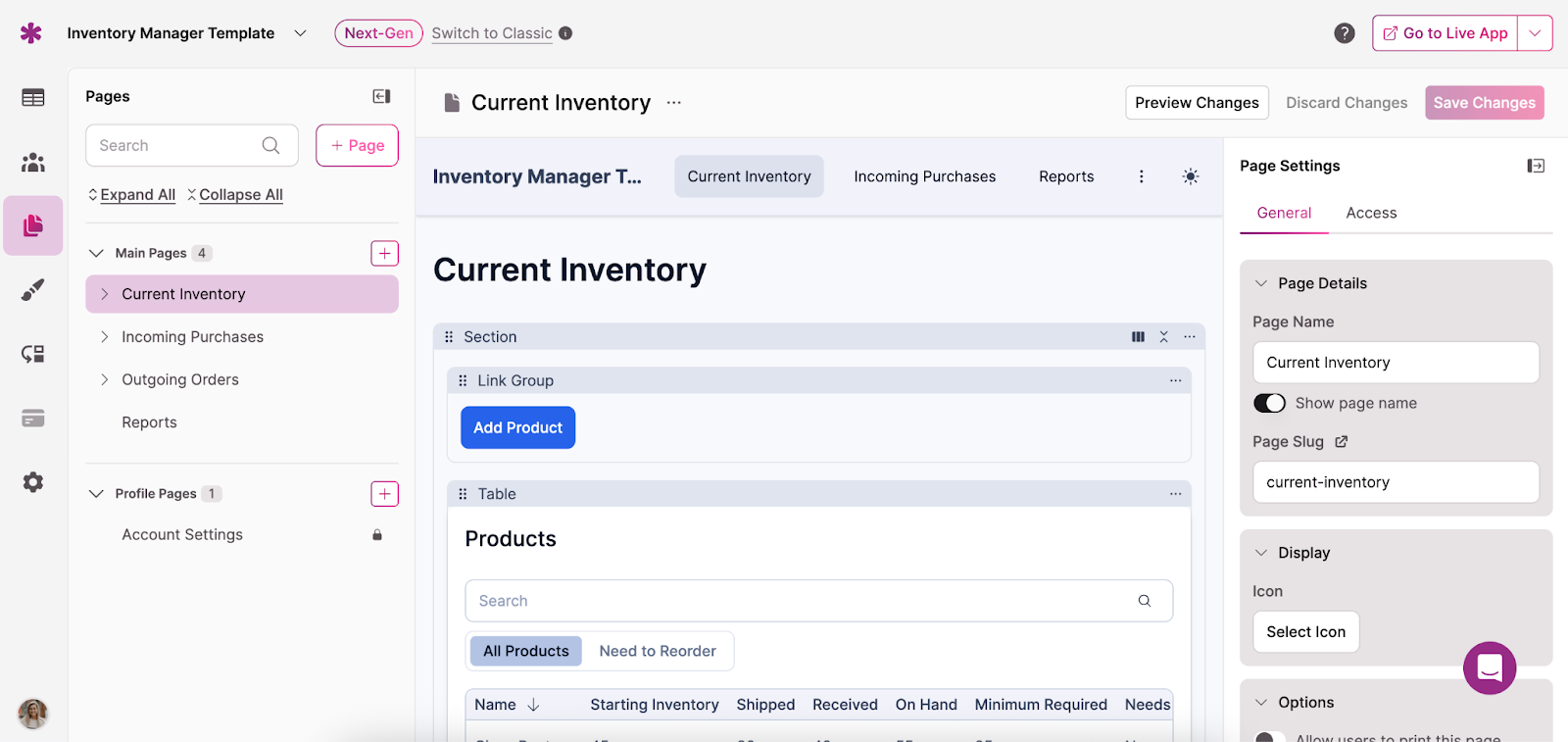
Businesses can easily build powerful AI-driven inventory solutions using Knack, enabling them to create custom systems without writing a single line of code. Leveraging no-code AI for inventory management can significantly reduce costs, simplify customization, and empower users with little or no technical experience to design a system tailored to their unique operational needs.
Some of Knack’s key features include:
- Visual Builders – Drag-and-drop tools let you create apps and dashboards without coding.
- Automation Workflows – Automate tasks like reorder triggers, notifications, and reporting to save time.
- Integrations with Popular Tools – Seamlessly connect with platforms like Shopify, QuickBooks, and Xero.
- Custom Reporting & Analytics – Generate real-time insights to track inventory performance and trends.
- Role-Based Access Control – Assign permissions to ensure the right team members see and manage relevant data.
Sign up for your free, no-risk trial of Knack today!
Conclusion: Smarter Inventory, Simpler Systems
By providing accurate forecasts, seamless replenishment, and real-time anomaly alerts, AI transforms how businesses manage inventory and respond to demand.
While investing in these technologies often pays for itself quickly, using a no-code approach makes implementation more affordable and easier to manage. Tools like Knack allow businesses to deploy AI-driven inventory solutions rapidly, empowering teams to optimize operations without needing technical expertise.
Ready to bring AI into your inventory operations?
Build your own smart inventory system today with Knack’s no-code AI App Builder — start your free trial today!
FAQs: Common Questions About AI for Inventory Management
What is AI for inventory management?
AI for inventory management automates forecasting, restocking, and anomaly detection, helping businesses maintain optimal stock levels with less manual effort.
Can AI predict future inventory needs accurately?
Yes, AI uses predictive analytics and demand forecasting software to analyze historical data, trends, and real-time sales, enabling highly accurate predictions of future inventory needs.
How do I start using AI for inventory management without coding?
You can start with Knack’s AI App Builder, which makes setup simple, and explore its features through a free trial to see how it works for your business.