


 Log In









Financial advisors juggle the complex demands of managing diverse client portfolios, staying compliant with ever-changing regulatory requirements, and delivering the personalized service today’s clients expect. These challenges can quickly become overwhelming without the right systems in place.
That’s where customer relationship management (CRM) software comes in—offering a centralized hub to organize client information, automate routine workflows, and strengthen client engagement.
In this guide, we’ll explore how a CRM designed specifically for financial advisors can streamline operations, support compliance, and ultimately transform the way you manage and grow your practice.
Key Takeaways
- CRMs built for financial advisors offer features like compliance tools, workflow automation, and portfolio tracking that generic CRMs lack—making them essential for managing client relationships at scale.
- Selecting and implementing the right CRM involves assessing your firm’s needs, customizing workflows, and ensuring secure, integrated data systems that grow with your business.
- Knack provides a no-code, fully customizable CRM platform ideal for financial advisors looking to streamline operations, personalize client service, and adapt to wealth transfer trends.
Why Financial Advisors Need CRM Software
It’s essential that financial advisors understand exactly what a CRM is designed to do and the benefits it offers in order to make the most of these powerful tools. When fully leveraged, CRMs can enhance the client experience through more personalized service while also simplifying client management and acquisition for advisors.
What Is a CRM?
A customer relationship management system is software that helps businesses manage interactions with both current and potential clients by organizing data, communications, and key touchpoints in one place. For financial advisors, this means having a centralized platform to track client relationships, streamline processes, and deliver more personalized, efficient service.
Benefits of Using a CRM Built for Financial Advisors
General-purpose CRMs often fall short for financial advisors because they lack specialized features like portfolio tracking, compliance reporting, and financial goal planning.
Specialized CRMs are generally a stronger option, as they’re tailored to:
- Handle sensitive financial data: Securely store and manage client financial records with advanced encryption and data protection measures.
- Track client interactions: Keep a detailed record of meetings, calls, and touchpoints to maintain a clear history of each client relationship.
- Ensure compliance with industry regulations: Provide built-in tools and reporting features that help advisors stay compliant with financial industry standards.
- Support marketing and referrals: Streamline marketing campaigns and referral programs to attract and convert new clients more effectively.
- Facilitate personalized communication: Enable tailored messaging and engagement tracking to strengthen long-term client relationships.
3 Easy Ways to Start Building For Free
1. Generate an App with AI
2. Use one of our templates
3. Import your own data

Free 14-Day Trial. No Credit Card Required
Key Features of an Effective CRM for Financial Advisors
CRMs for financial advisors are built to serve as comprehensive solutions, enabling all aspects of client management to be handled within a single unified platform. From real-time communication and personalized interactions to workflow automation and secure data handling, these systems empower advisors to manage a wide range of tasks efficiently and effectively.
Client Data Management & Profiling
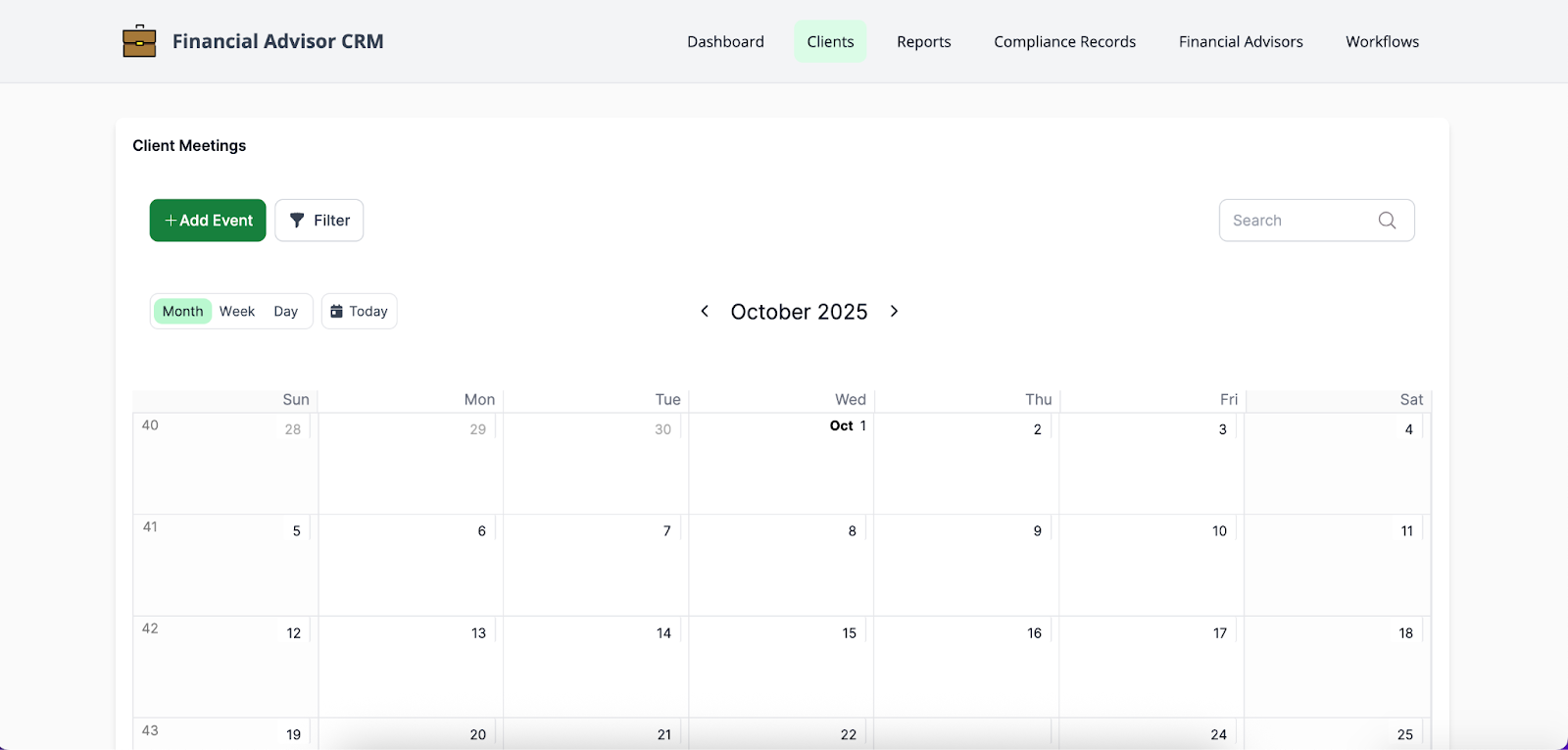
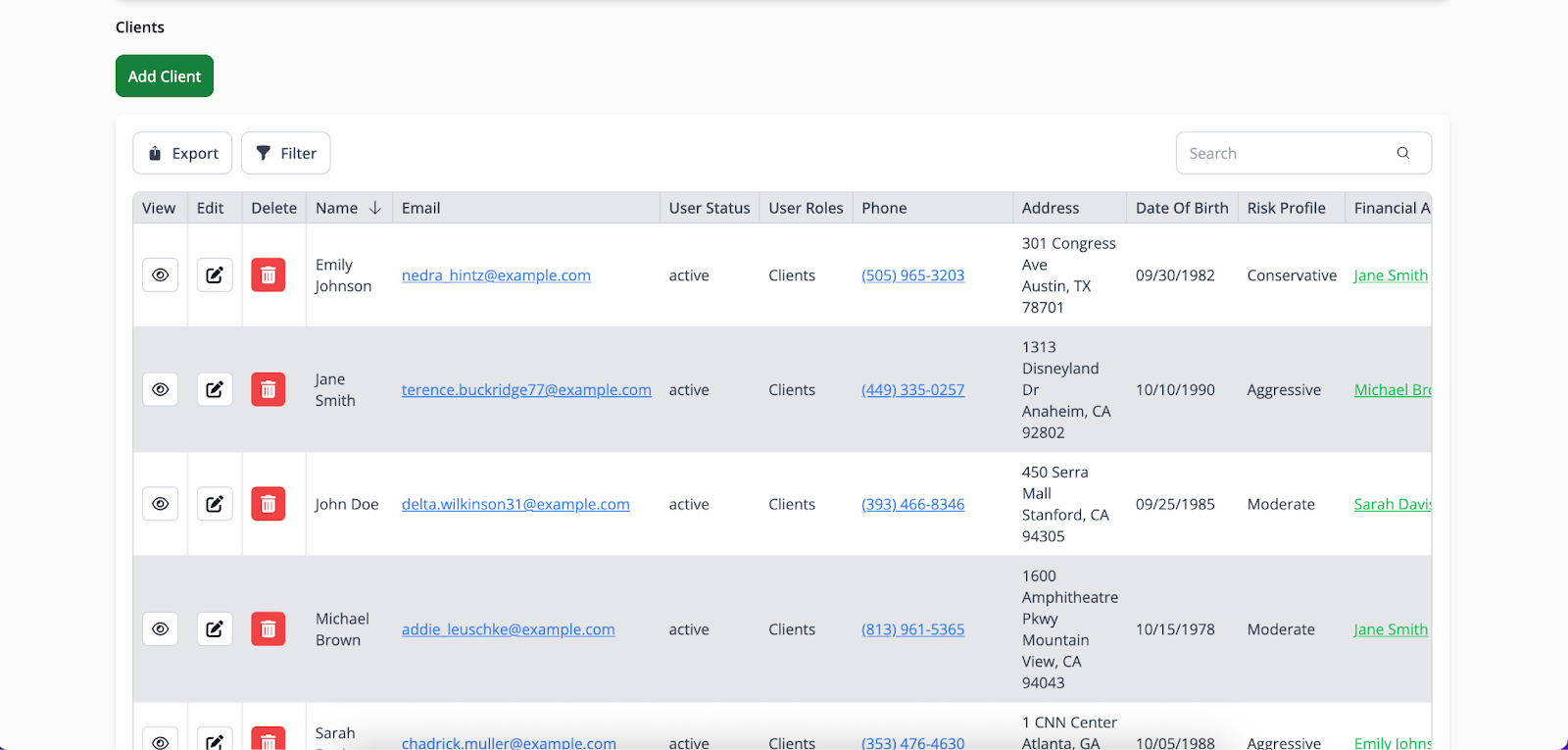
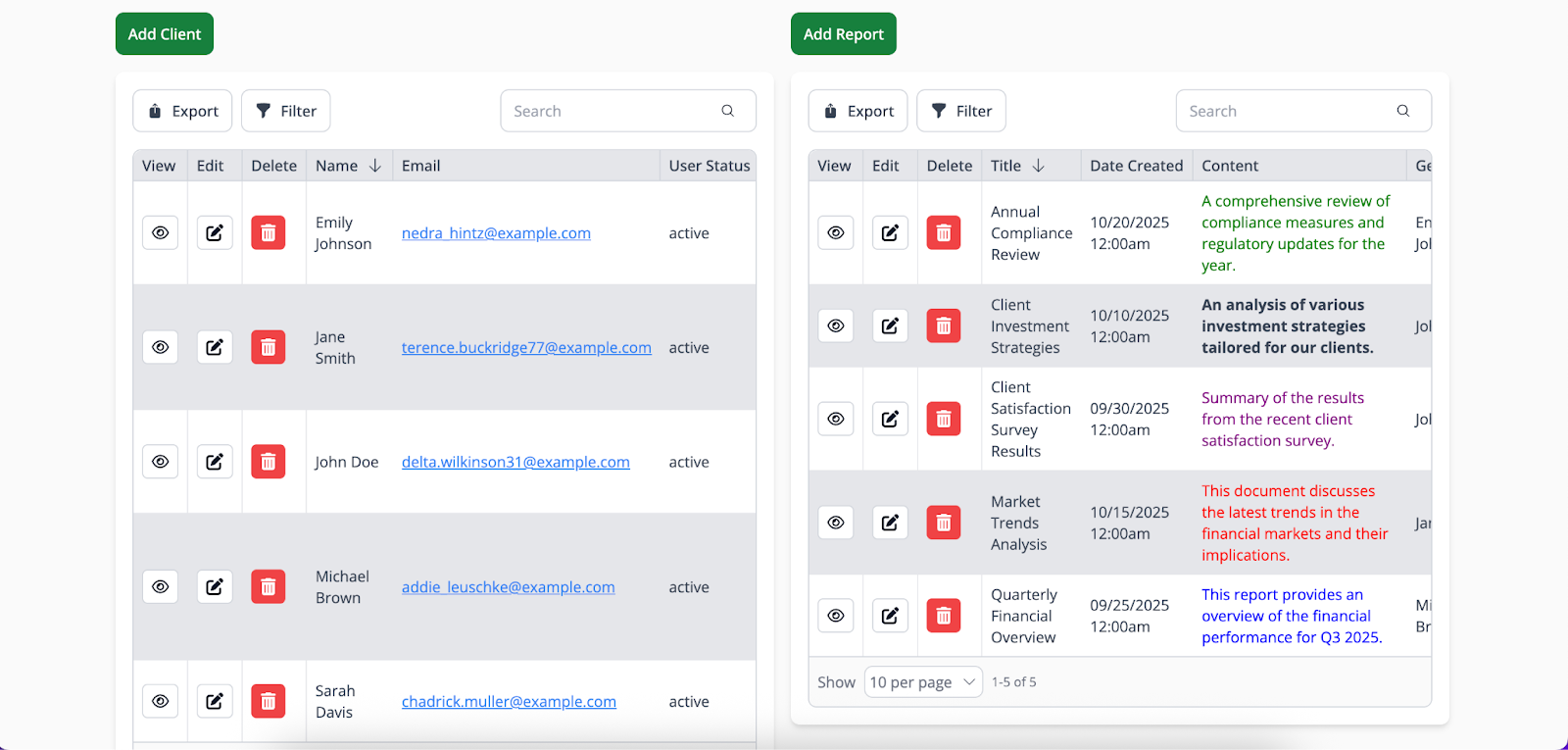
By storing detailed information about each client—such as financial goals, risk tolerance, investment preferences, and communication history—CRMs create a centralized hub of data that supports personalized service and more informed decision-making. With all relevant details in one place, advisors can quickly access the full picture of a client’s financial journey without sifting through scattered files or emails.
For example, when recommending an investment strategy, an advisor can instantly see a client’s past communication preferences and risk profile, allowing them to tailor their recommendation with more confidence and less effort.
Workflow Automation
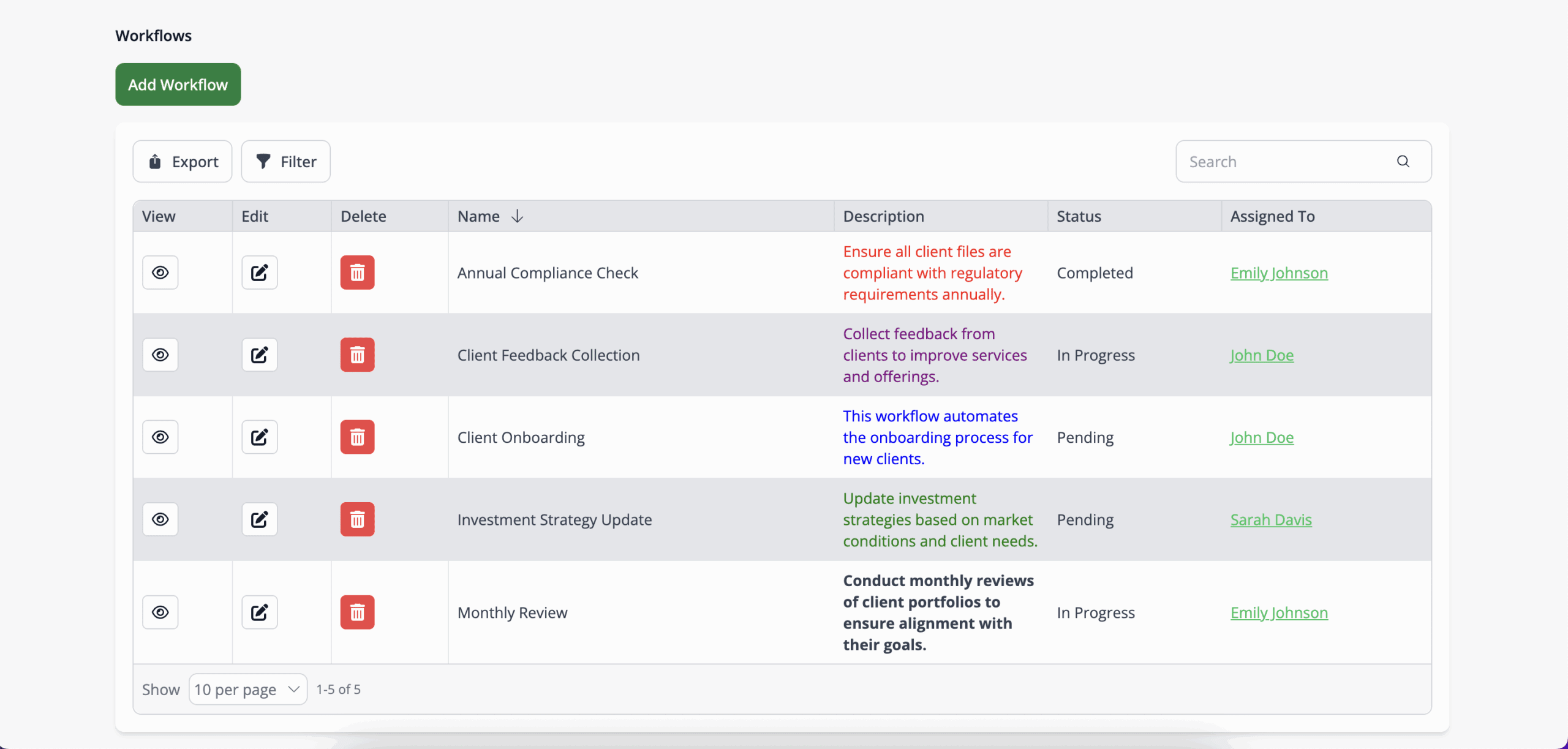
Automating routine tasks like scheduling meetings, sending reminders, and generating reports can significantly increase efficiency and ensure timely follow-ups with clients. This works both ways, keeping both clients and financial advisors aware of important upcoming dates. Without this capability, advisors risk missed appointments, delayed responses, and overlooked tasks, which can lead to frustrated clients and lost opportunities.
Compliance and Security
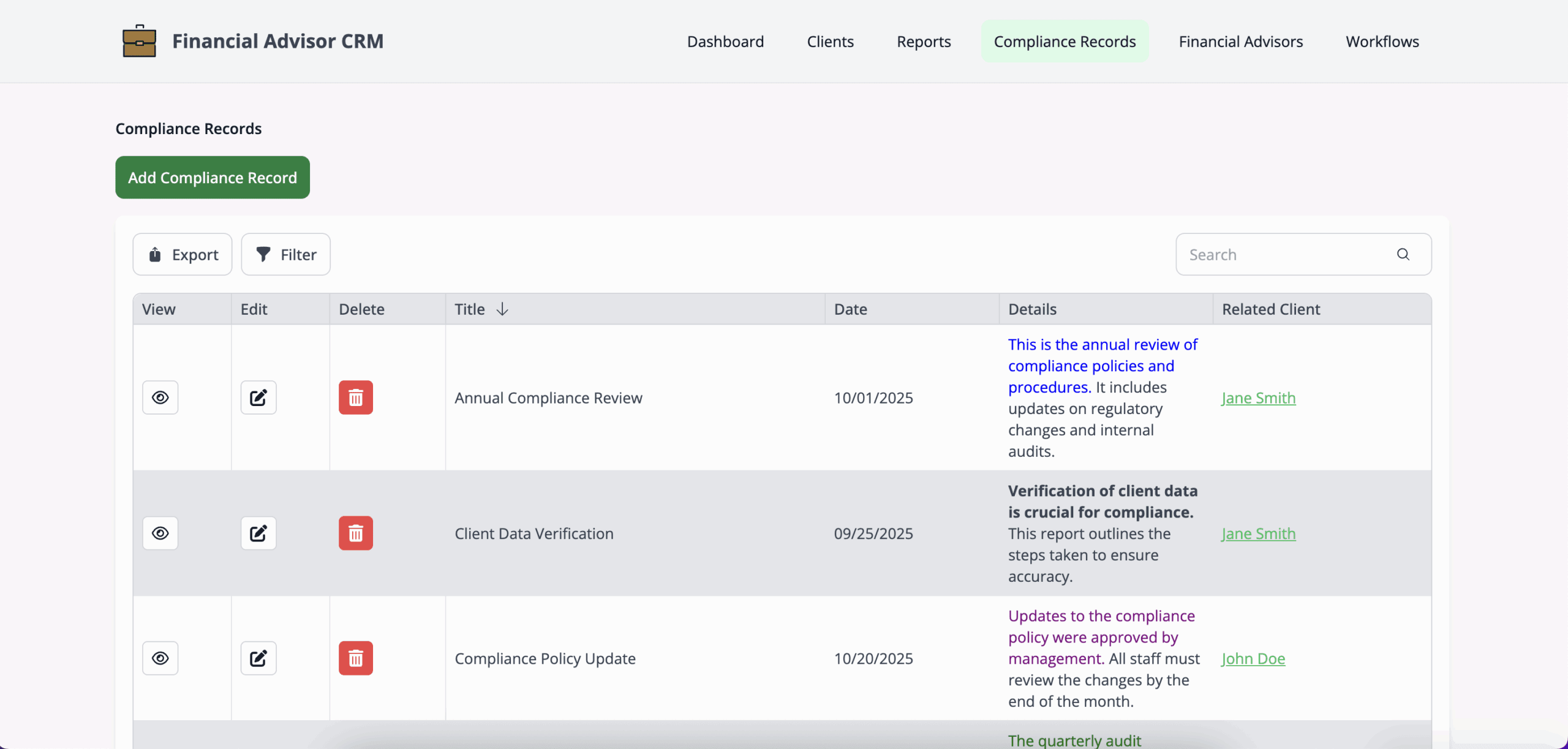
Data security is essential in any industry, but in financial management—where client information is especially sensitive—any lapses can result in a serious loss of trust and long-term damage to your reputation.
Ensuring that your CRM stores all client data securely and complies with industry regulations, such as GDPR or FINRA, is therefore critical. This often involves features like audit trails and data encryption, which help advisors safeguard information while maintaining transparency and accountability with their clients.
Reporting and Analytics
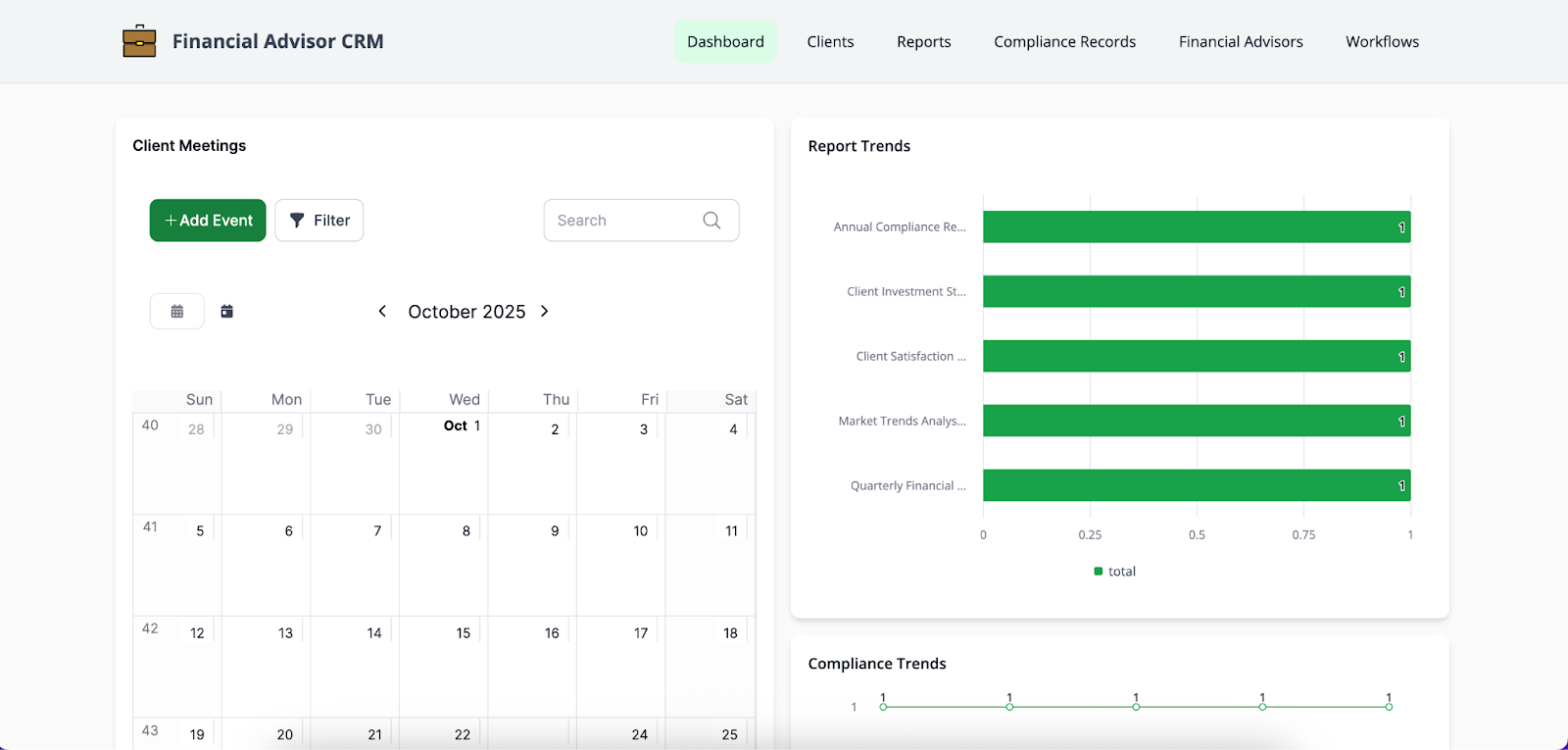
Leveraging the reporting and analytics tools in CRMs is critical for financial advisors to gain a clear understanding of their business and client performance.
These tools can generate detailed reports on client portfolios, performance metrics, and overall business growth, providing actionable insights at a glance. Analytics features help advisors identify trends and spot opportunities, ultimately enabling more strategic planning and better outcomes for both the firm and its clients.
Integration with Financial Tools
Most CRMs offer the ability to integrate with other business systems, but it’s crucial to confirm that your chosen platform is compatible with your existing tech stack before committing. Financial software such as portfolio management platforms and accounting tools are commonly integrated with CRMs to create a seamless workflow across different systems.
Connecting a CRM with an accounting tool like QuickBooks, for instance, allows client billing and payment information to flow automatically between platforms, reducing manual data entry, minimizing errors, and ensuring both systems stay up to date with minimal effort.
AI Features in Modern CRMs
Modern CRMs have become more powerful than ever before with the integration of AI technology, giving financial advisors deeper insights and more streamlined workflows than were previously possible.
AI-powered features commonly found in these systems—such as predictive analytics and automated scheduling—help advisors work more efficiently by anticipating client needs and managing routine tasks automatically. These capabilities enhance the overall user experience by reducing the potential for human error, identifying potential issues early, and making client management more efficient and effective for both advisors and their clients.
How to Use CRMs to Engage Key Market Segments
CRMs can be extremely valuable tools for financial advisors, supporting both new client acquisition and the management of existing client relationships.
Here are a couple of examples of how these systems can be used in practice:
Targeting High-Net-Worth Clients and Generations X and Y
With CRMs, financial advisors can strategically target high-net-worth clients and key demographics by leveraging insights into wealth shifts and emerging trends. Features such as segmentation tools, automated outreach campaigns, and detailed client profiles allow advisors to tailor marketing and engagement efforts to specific client needs and preferences.
For example, an advisor could use a CRM to identify younger, tech-savvy clients who are beginning to accumulate wealth, then launch a personalized email campaign highlighting investment opportunities and financial planning services that resonate with their goals, thereby increasing the likelihood of acquisition and long-term engagement.
Managing the Great Wealth Transfer
The great wealth transfer refers to the projected movement of trillions of dollars from the baby boomer generation to younger generations, creating both significant opportunities and challenges for financial advisors. CRMs can help advisors navigate this shift by organizing and segmenting clients by generational profiles, tracking intergenerational relationships, and automating targeted communications to heirs and beneficiaries.
Here, strategies might include using predictive analytics to identify clients likely to receive inheritances, launching personalized outreach campaigns to engage younger clients early, and leveraging reporting tools to monitor engagement and plan succession, ensuring advisors can maintain and grow their client base during this massive transfer of wealth.
Step-by-Step Guide to CRM Implementation
Whether you’re adopting your first CRM system or transitioning to a new platform, it’s essential to conduct thorough due diligence by assessing both your internal needs and the product’s features to determine the best fit. Even after selecting the right tool, proper implementation is crucial, as it greatly influences how effectively the solution supports your team and enhances overall productivity.
Here are some steps to keep in mind to ensure you’re able to leverage your new system to its fullest potential:
Assess Your Needs
When choosing a new CRM, it’s important to evaluate your current processes and pinpoint areas where a system can add value, such as client onboarding, portfolio tracking, or compliance management. While online research and user testimonials can provide insight into how a platform has served others, it’s crucial to tailor your selection process to your own specific needs.
Without carefully considering your internal requirements, you might end up with a competent general solution that functions adequately but lacks the specialized features necessary to address the unique demands of your practice.
Choose the Right CRM
There isn’t a one-size-fits-all answer for which CRM is best; the ideal solution depends on which platform offers features that align most closely with your specific requirements.
For instance, during the selection process, an advisor might map out their workflow and realize that automated compliance reporting and integration with their portfolio management software are critical, guiding them to prioritize CRMs that excel in those areas over others with more general features.
We suggest weighing factors such as your practice’s size, client base, and the specific expectations of your clients to ensure the system meets your operational needs. Other important considerations include scalability, customization options, and the quality of support services to ensure the platform can grow and adapt with your practice.
Customize the CRM
Once you’ve selected a CRM solution, the next step is to tailor it to fit your specific workflow by customizing fields, templates, and automation rules to match how your practice operates.
This customization can streamline processes and ensure that all client interactions and data tracking align with your unique needs. Achieving this often involves configuring forms, setting up automated reminders, and adjusting reporting tools—which can be complex and time-consuming with traditional platforms.
Using a no-code platform like Knack simplifies the process, allowing advisors to create a fully customized CRM without the need for expensive development resources, while ensuring the system grows and adapts alongside their business.
Train Your Team
Even if your chosen CRM includes all the features and functionalities your operation requires, those tools are only valuable if you and your team know how to use them correctly.
Providing comprehensive training ensures that team members are proficient in navigating the system, maximizing its benefits, and applying its capabilities to daily workflows. In addition to improving overall effectiveness, proper training fosters user buy-in, as team members are far more likely to embrace a new system when they understand how to use it confidently and efficiently.
Monitor and Optimize
After selecting and successfully implementing a CRM, ongoing monitoring and optimization are also crucial to ensure the system continues to meet your evolving needs. Regularly reviewing CRM performance and gathering feedback from users helps identify areas for improvement and fine-tune workflows, keeping the platform aligned with your practice’s growth.
Continuous optimization ensures the CRM evolves alongside your business, while failing to track these insights can lead to inefficiencies, missed opportunities, and a system that no longer adequately supports your operations as your client base and processes change.
Why Financial Advisors Choose Knack’s No-Code CRM
If you’re struggling to find a ready-made CRM that fits your organization’s unique needs, building your own system offers a powerful alternative. Designing a custom platform allows you to tailor features, workflows, and integrations specifically to your business, providing greater flexibility and scalability compared to an out-of-the-box solution.
Among the options available, Knack stands out thanks to its no-code platform, robust feature set, and flexibility, enabling users to easily build a CRM tailored to their specific requirements without the need for technical expertise.
Just a few of the reasons why financial advisors prefer Knack include:
- Client data management: Store and organize detailed client information, including portfolios, communication history, and financial goals, in a centralized, secure platform.
- Workflow automation: Automate routine tasks such as reminders, follow-ups, and reporting to save time and reduce the risk of errors.
- Robust reporting: Generate customizable reports on client performance, business metrics, and portfolio trends to support informed decision-making.
- Integration capabilities: Seamlessly connect with other financial tools, such as accounting software and portfolio management platforms, to create a cohesive workflow across your tech stack.
Final Thoughts: Future-Proof Your Advisory Practice with Knack
CRMs are vital for financial advisors who want to make client management more effective and efficient, as they help streamline workflows and centralize important client information. For many advisors, general-purpose solutions lack the specialized features needed—such as portfolio tracking, compliance support, and personalized client engagement—making it essential to choose a system tailored to financial advisory practices to enhance productivity and client satisfaction.
That’s why Knack is a preferred solution for financial advisors, offering a no-code, customizable platform with the flexibility and features needed to meet the unique demands of financial advisory practices. By adopting Knack, advisors can spend more time delivering personalized service and less time on administrative tasks, ultimately driving both business growth and client satisfaction.
Try Knack for free today—no credit card required!
CRM for Financial Advisors FAQs
What is CRM software for financial advisors?
CRM software helps financial advisors manage client relationships, track financial goals, and stay on top of compliance.
How does a CRM improve client engagement?
It makes it easy to send personalized messages and follow up on time, helping you build stronger client relationships.
Can a CRM help with compliance?
Absolutely—CRMs include features like secure data storage and audit trails to help you stay compliant with regulations.
Is Knack suitable for small advisory firms?
Yes! Knack is both customizable and scalable, making it a great fit for firms of any size.
How can I integrate Knack with other financial tools?
Knack works with tools like Zapier and various financial software to create smooth, connected workflows.